
The Long Wait
Captain James Cook completed the first major expedition to Antarctica from 1772 to 1775 on the HMS Resolution.1 Before this expedition, geographers widely agreed that there must be a continent, labelled Terra Australis Incognita, that was necessary to “balance out” the Arctic in the north.2 This was reflected in the maps that people had of the globe pre-1700s.
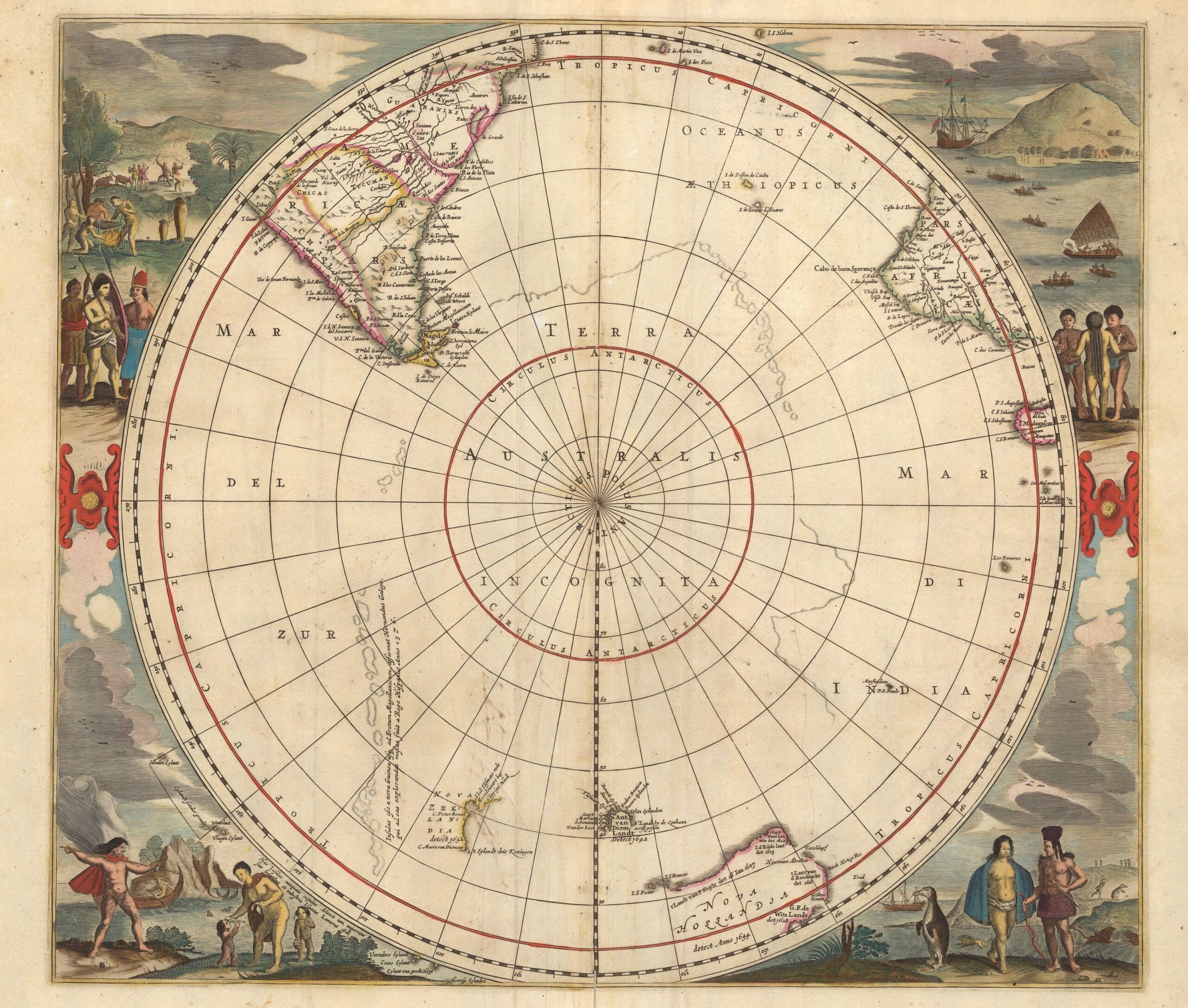
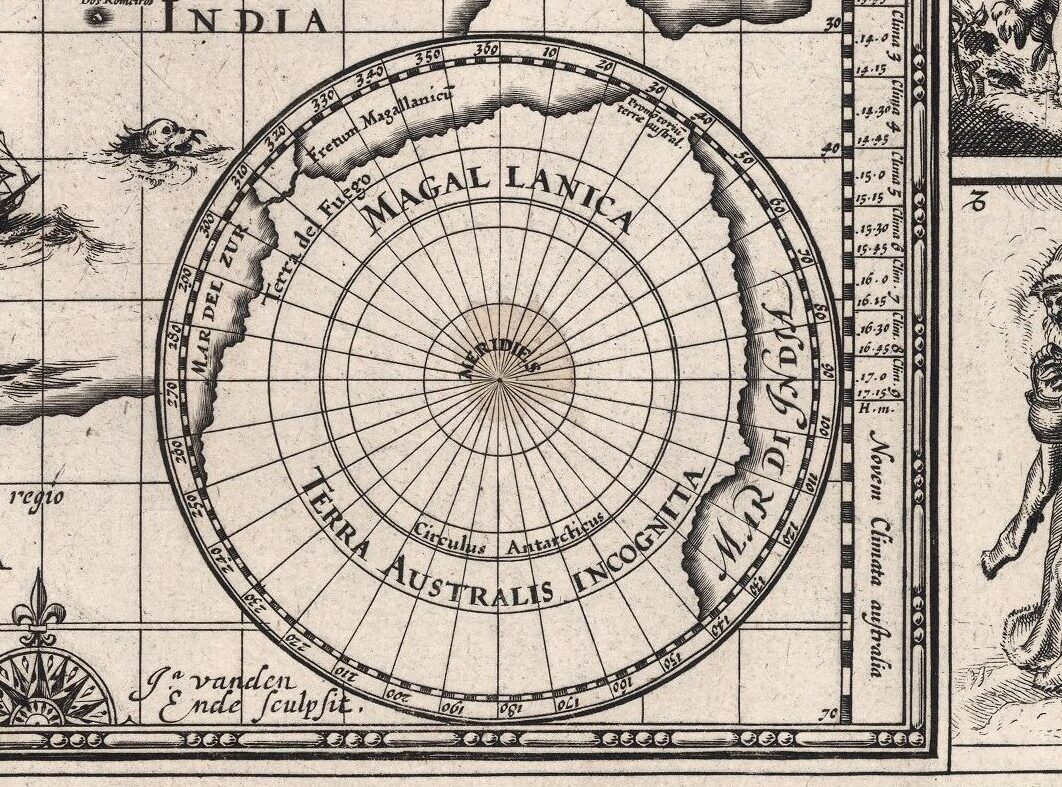
Cook was then tasked by the Royal Society in London to discover whether Terra Australis Incognita actually existed.5 However, Cook never found any such land mass and only discovered uninhabitable ice. In fact, he urged others not push further south.
“Should anyone possess the resolution and fortutude to [push] yet further south… I make bold to declare that the world will derive no benefit from it”6
-James Cook
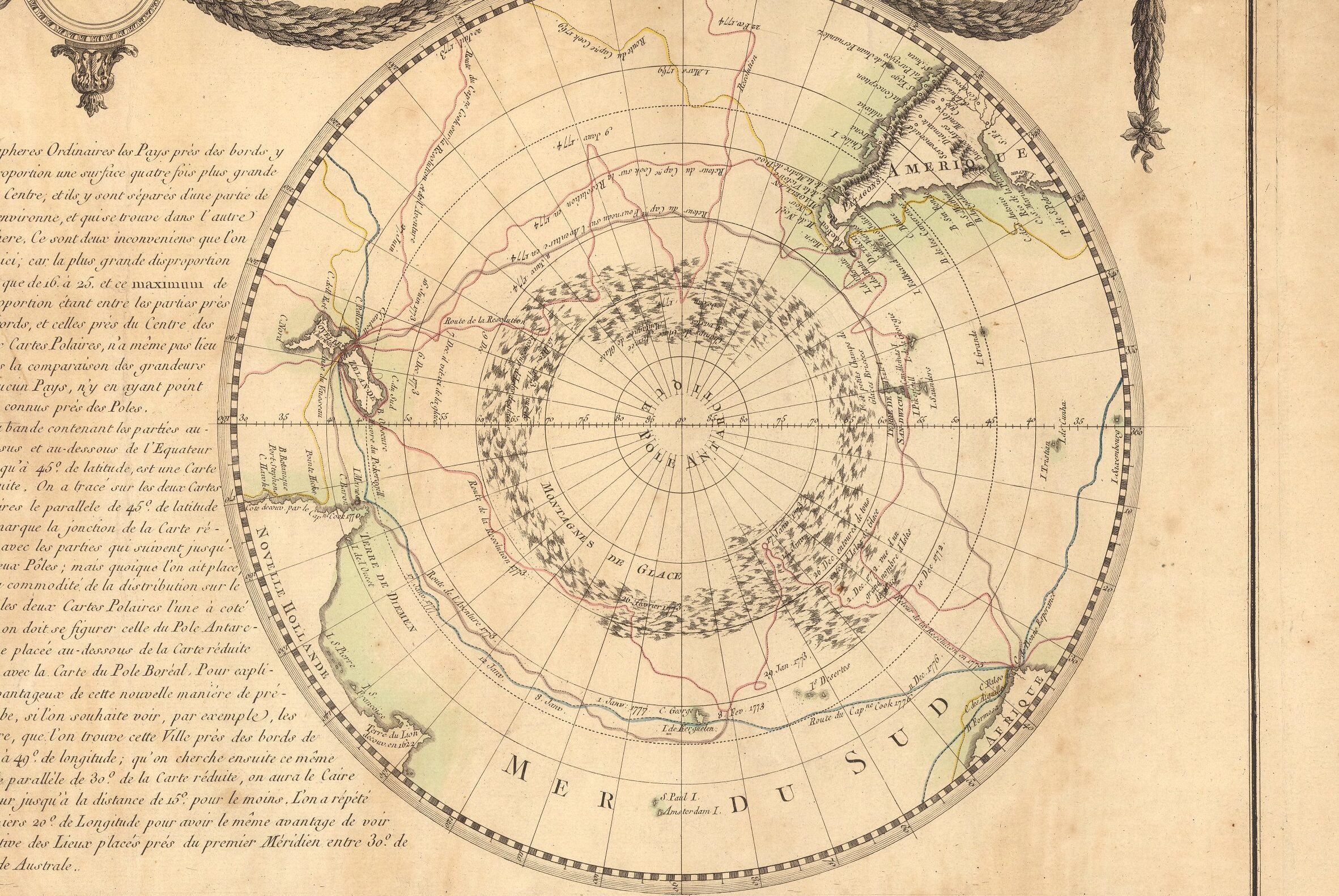
Through this claim, James Cook argued that there either is no southern continent, or that it is so far out of reach and impractical to reach that there would be no benefit to the world in discovering it. This expedition shut down any further operations in Antarctica for at least the next 50 years as maps such as the one below began to print. In the map below, the area around the south pole there is a label “Montagnes De Glace,” traslating to ice mountains, greatly discouraging exploration further south. This created a lasting false narrative that took years to dismantle.
Discovering the Continent
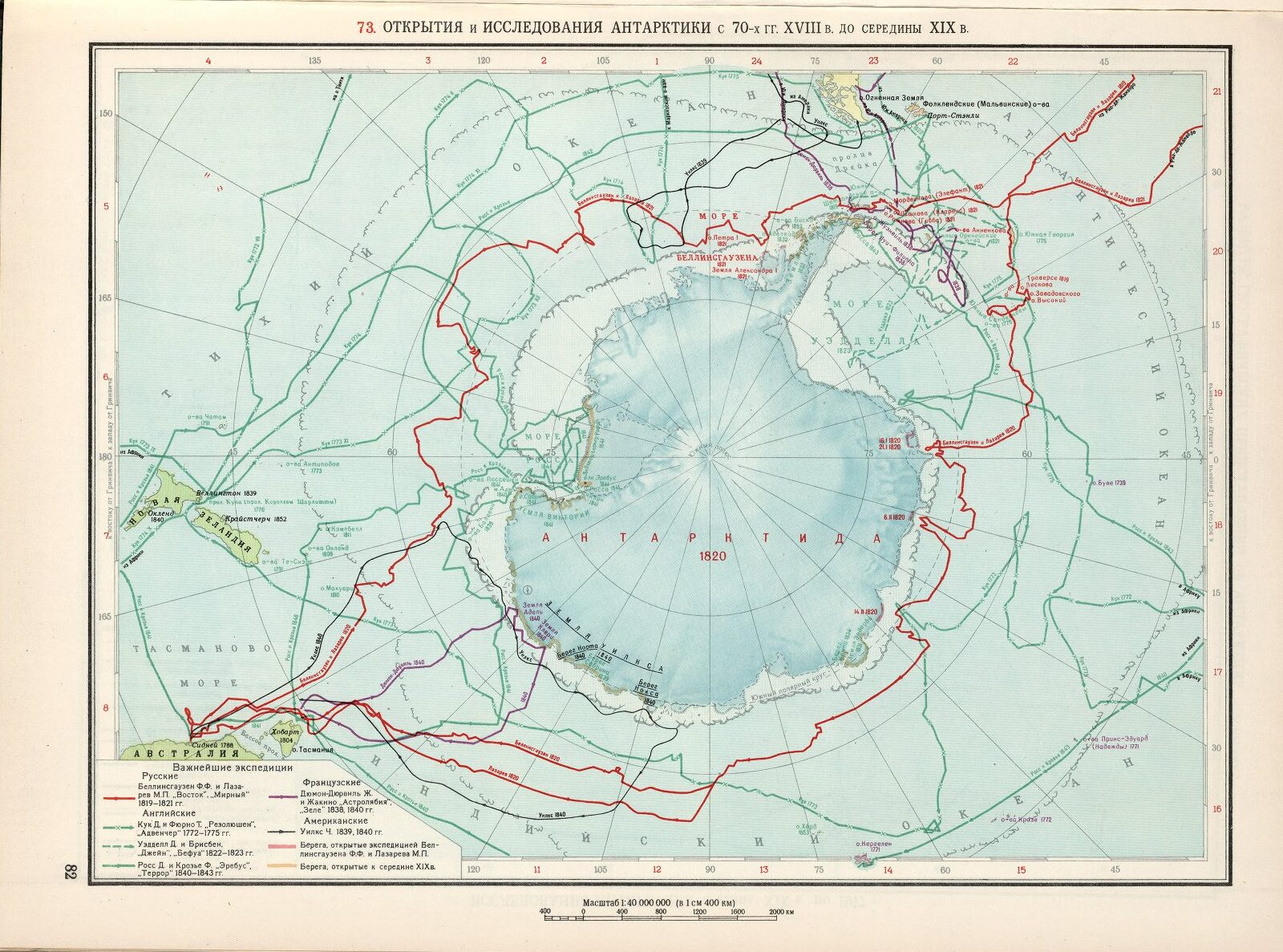
The first group to see Antarctica as a continent is debated, but it is between Thaddeus von Bellingshausen and Edward Bransfield.8 For Thaddeus von Bellingshausen, the Russians hired him to go chart Antarctica as they wanted to use the Southern Ocean to train navigation and seamanship in times of peace, as well as prove that Russia was useful in the cartography realm.9 On his trip from 1819 to 1821, Bellingshausen and his crew circumnavigated Antarctica and were able to chart out many islands near Antarctica, effectively disproving James Cook’s argument that the island did not exist. Edward Bransfield’s expedition was due to William Smith, a sealer working in the Southern ocean, claiming that there was land south of Cape Horn.10 Edward Bransfield was then hired to explore for new land and help chart the region for Britain. He surveyed the Southern Shetland Islands and eventually went further south and discovered Antarctica. While it is debated which of these two explorers discovered Antarctica first, both of these explorers worked to dismantle James Cook’s assumption. Although they had not found the purpose of the island yet, these explorers proved that there was a southern continent, albeit difficult to explore.
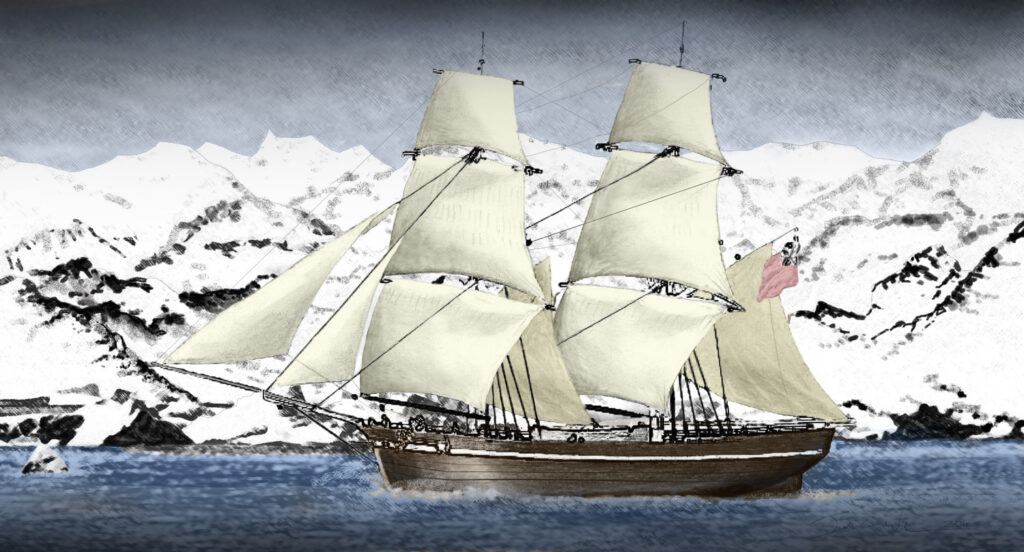

The next group of people to travel to Antarctica was those who were searching for oil from seals and whales after a shortage in the Arctic Circle.14 Although there were opperations being done in the south, such as William Smith, who caused Edward Bransfield to explore south, there was a large increase in need for oil as the world became more industrial. Furthermore, Sir John Murray is highlighted in pushing for further navigational benefits of travelling south, where in the 1886 Scottish Geographical Journal, he published an important treatise that “led to the despatch of the Dundee whalers…[directing] further attention to Southern exploration.”15
Why the 1900s?
Compass Navigation
As you approached towards the poles of the Earth, especially the south pole, compasses began to “subtly [change] the direction in which they pointed; and the further you went polewards, the more erratic they seemed to become.”16 The Erubus and Terror ships, two vessels strengthened for Arctic ice, were tasked in the early 1800s to give magnetic readings of the South Pole.17 The HMS Pagoda also gained magnetic readings of the south, but both the readings from these groups of ships were considered to have “significantly failed” to give any connection between the magnetic fields and “physical phenomenon” in the south. In fact, these readings became so outdated and unclear due to shifts in the Earth’s magnetic field that “the South Magnetic Pole…appeared to have migrated northward.”18 Sir Clements Markham, a notable geographer, claims that “the most important [purpose of Antarctic exploration] would be the benefit to the science of terrestrial magnetism.”19 Thus, as shipping routes and travel became more common, it became necessary for ships to push further south to understand exactly how compass navigation changes as you move around the globe.
Technological Advancements
As the 1900s approached, many technological advancements, such as steam engines, reinforced hulls, and icebreakers. J. P. Morley highlights in his work written in Polar Records that “he first ships modified for working in ice were tugs and harbour vessels with reinforced hulls and extra power.”20 The first polar icebreaker was made in 1899 for the Russian ship Yermak, revolutionizing the way that ships approached the Antarctic ice field. Finally, advancements in steam engines became increasingly powerful, as “by 1890, over 100 patents associated with marine steam turbines had been issued.”21 There was also a shift in using coal as fuel to using oil, though this shift was becoming common right when Shackleton began his expedition.
The Last Uncharted Continent
As we approached the 1900s, sailors with a sense of adventure realized that the Antarctic continent had become a sense of purpose. This shift from traveling for an economic and social benefit to simply a sense of adventure and exploration was highlighted in Ernest Shackleton, who stated that
“Some are actuated simply by love of adventure, some have the keen thirst for scientific knowledge, and others again are drawn away from the trodden path by the ‘lur of litle voices’, the mysterious fascination of the unknown.'”22
-Ernest Shackleton
this was compounded by multiple countries wanting to be the first country to explore the Antarctic continent. In 1895, the Sixth International Geographical Congress in London declared that “the exploration of the Antarctic Regions is the greatest piece of geographical exploration still to be undertaken. That in view of the additions to knowledge in almost every branch of science which would result from such a scientific exploration, the Congress recommends that the scientific societies throughout the world should urge in whatever way seems to them most effective, that this work should be undertaken before the close of the century.”23 These factors of compass navigation, technological advancements, and nationalistic pride compounded to create a race to the South Pole, where over ten different countries were all attempting to reach the South Pole first.24
The Heroic Age of Antarctic Exploration
The Belgica
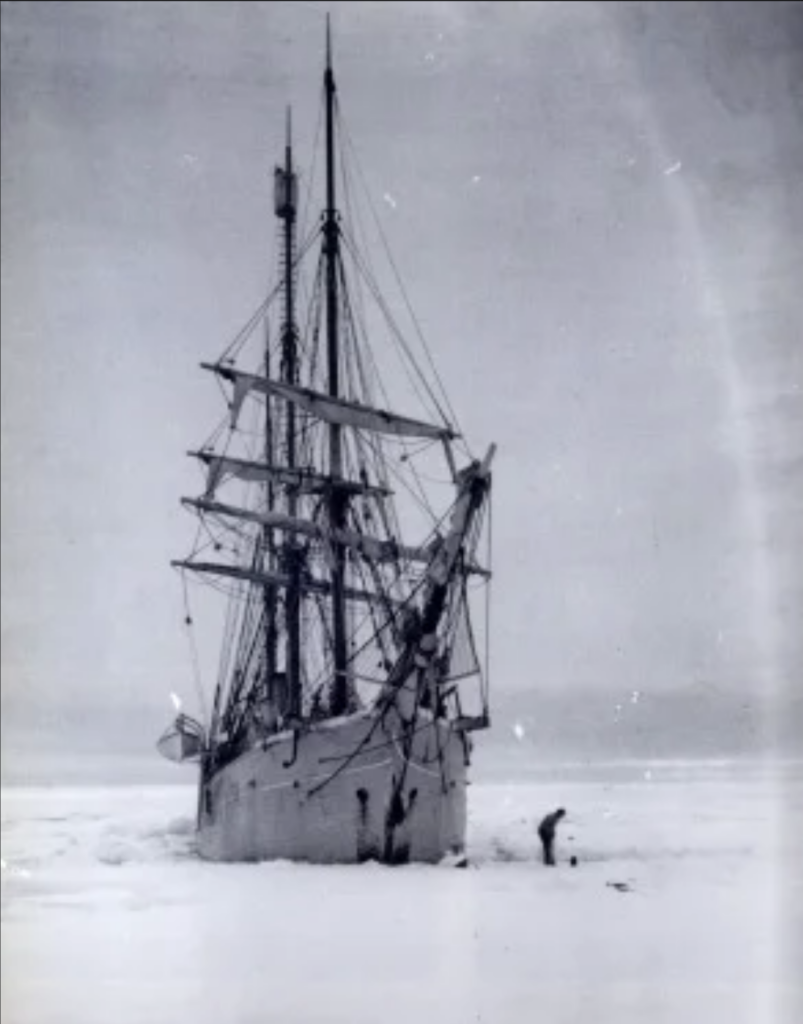
In the year 1897, the Belgians became the first country to attempt an Antarctic expedition during this time period. Captained by Adrien de Gerlache, the Belgica, a fairly new ship made only 10 years prior, was outfitted for a polar expedition, though not made to last for long amounts of time for additional research.26 Manned by a team full of scientists, including geologists, meteorologists, magneticians, oceanographers, as well as important future figures such as Roald Amundsen, who became the first person to reach the South Pole.27 In this expedition, de Gerlache pushed the crew further and further south, but due to weather complications, “On February twenty-eighth…were forced to take to the ice that the ship might better ride out a howling storm.”28 The Belgica stayed in the packed ice for the whole winter, causing the crew to be stuck in harsh weather conditions on a boat that was not prepared for longer journeys. With sunlight fading, causing scurvy in the crew along with -30 degree weather, the crew fell into both physical and mental health problems, reaching a point where Lieutenant Danco died aboard the ship.29 Despite this, after the ice thawed in the summer months, the crew was able to return to Belgium safely, becoming national heroes and making great contributions to many scientific fields. The crew helped map the Gerlache Strait, understand more about glacial theory, and offer the first comprehensive year-round weather data of Antarctica.30
The Southern Cross
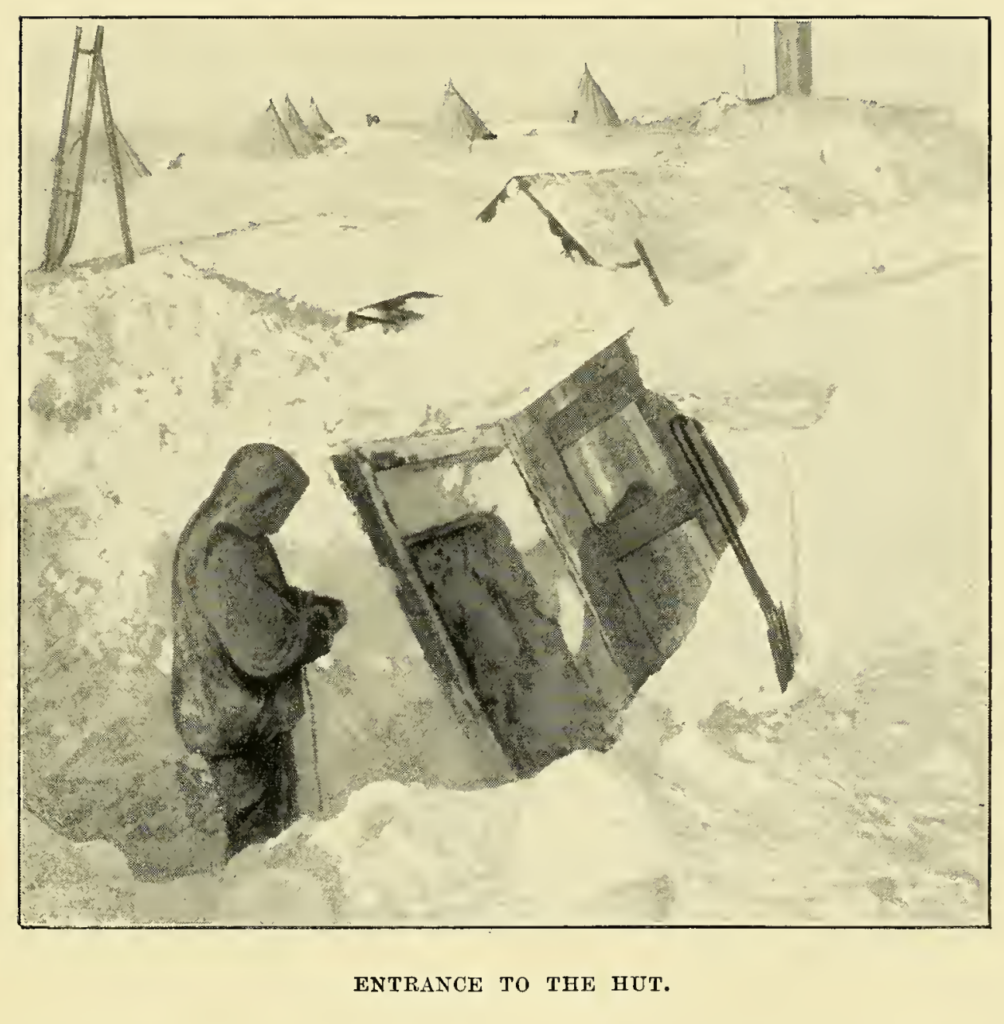
The Southern Cross was the first Antarctic expedition, led by Carsten Egeberg Borchgrevink, who had a group of 9 individuals who effectively spent the first winter in Antarctica. Carsten Egeberg Borchgrevink was a Norwegian explorer who, in 1895, claimed to be the first person to set foot on the continent, was caught lying, and then offered to go back to Antarctica with sledges to find the magnetic south.31 Although technically not the first to stay in Antarctica over the winter, as the Belgica had gotten stuck in Antarctica and was never truly on land, he was the first to make contact with Antarctica proper. In a journal article published in The Geographical Journal, Borchgrevink discusses the extreme conditions and difficulties of living on Antarctica, such as “hurricanes accompanied by driving snow” with “winds [having] a velocity of 87 miles an hour”, along with “waves of snow, ice, and water [dashing] up against the beach.”32 His trek was an overall success, but it also helped set the groundwork for how harsh Antarctic weather truly is. Finally, through his adventure, Borchgrevink gained valuable magnetic and meteorological information from his trip, as well as creating the first man-made structure on Antarctica, whilst proving that it is possible to live on the continent.33
The Discovery
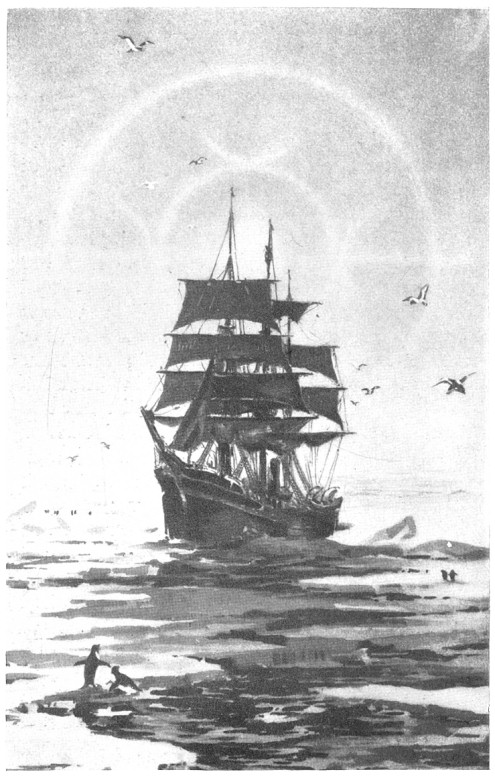
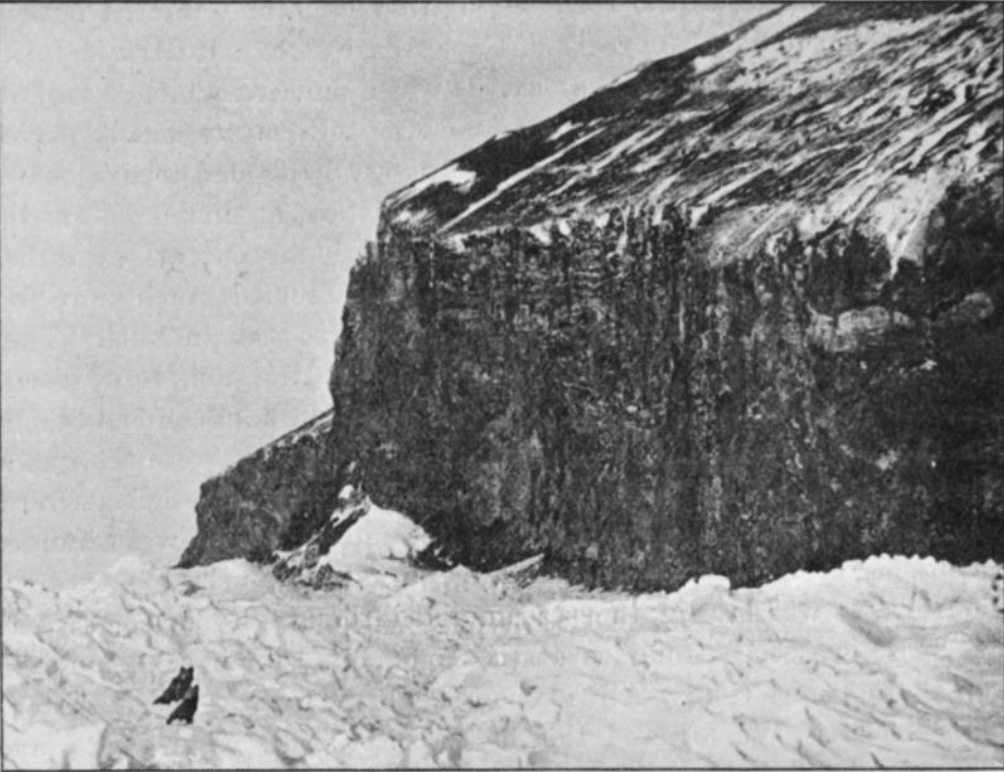
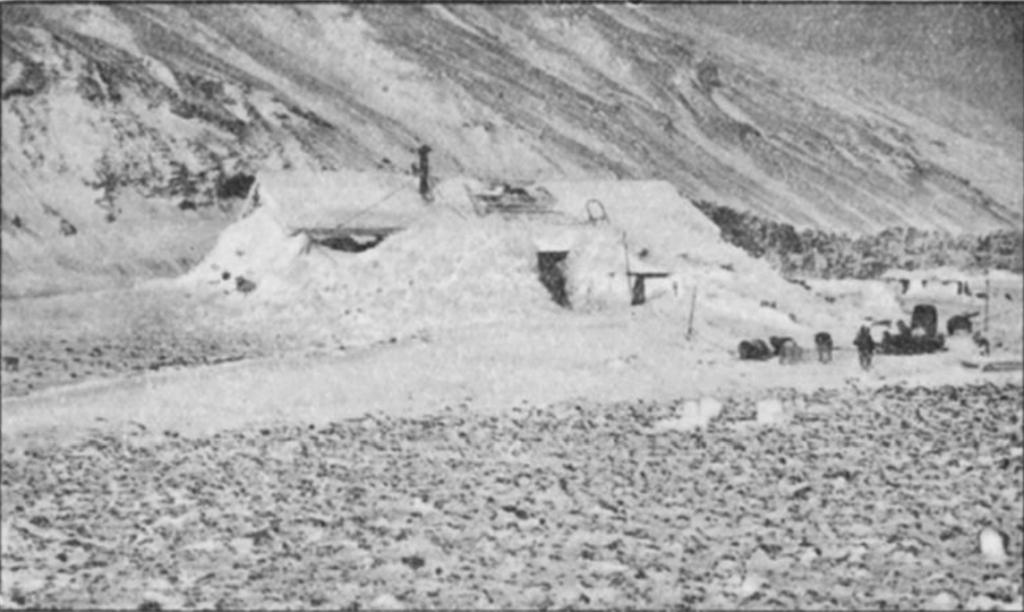
The Discovery was the first British land expedition to Antarctica, captained by Robert Falcon Scott, who became Ernest Shackleton’s main rival during this era.37 The Discovery expedition was the pride and joy of the British, being funded by both the Royal Society and the Royal Geographical Society, and launching from Britain full of future key players in the heroic age, such as Ernest Shackleton, Edward Wilson, Frank Wild, Tom Crean, and William Lashly. 38 On July 31st, 1901, the Discovery set sail for Antarctica, reaching Cape Crozier on January 22nd, where they would get stuck in the ice and set up home base for their ship at McMurdo Sound. 39 From McMurdo Sound, as well as their land base at Hut Point, the Discovery crew made many sledging trips in the surrounding areas, gathering important geological, meteorological, and biological discoveries. For example, some scientists aboard explored more of Ross Island, gathering photos “sufficient in themselves to prove the receding glacial conditions of the whole continent”40 One of the most important discoveries was “of the great ice cap on which the South Pole is situated”, which gave valuable information for future explorations of Antarctica.41 This exploration was one of the most successful scientific explorations of Antarctica, having “their results being recorded in twelve large quarto volumes.”42 Though they were not the first expedition to reach the South Pole, they provided the scientific knowledge for future expeditions to do so.
The Fram
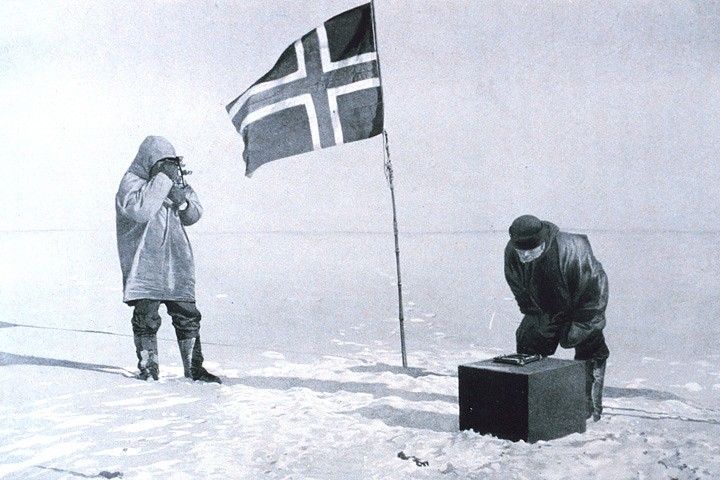
The Fram departed Norway in 1910 under the command of Roald Amundsen, who was on the Belgian Antarctic expedition 13 years prior. Built specifically for Antarctic exploration, the Fram was Norway’s big attempt to break through the impenetrable wall that is the South Pole. Fridtjof Nansen, the main architect building the Fram, dreamed of a ship “so small and so strong as possible … that it was improbable that it could be destroyed by the ice.”43 The hull was comprised of Greenheart wood, which was the strongest type of wood available on the market, and the hull was made specifically to be lifted over the ice instead of churning through. Furthermore, when Amundsen got his hands on the ship, he updated the engine to a diesel engine, the first of the polar expedition ships to do so.44 On their expedition, Amundsen recounts how excruciating the conditions were, such as “-75 degrees F…working with bare fingers” and “the day I put on my invention, I not only got my nose frozen, but my forehead and cheek as well.”45 But, they continued to push for the South Pole after winter was over. Their journey further south was no easier, having to ascend the Axel Hieberg Glacier where “the crevasses were bottomless.”46 Mentally, they also had to cope with the need to kill 24 of their 42 dogs to save weight.47 When trekking through the last 300 miles, they had to endure through “big, hard snow-waves” called sastrugi, which were “impossible to [stay] on one’s feet.”48 Yet, despite these conditions, Amundsen and his crew pushed through and became the first people to reach the South Pole. This did not mark the end of the Antarctic Age of Exploration, though. Rather, others, such as Ernest Shackleton, attempted to travel through the entire continent on foot.
Footnotes:
Timeline:
- “The Race to the South Pole: Scott and Amundsen | Royal Museums Greenwich”. n.d. Accessed 15 March 2026. https://www.rmg.co.uk/stories/maritime-history/race-south-pole-scott-amundsen.
- “A View of Cape Stephens in Cook’s Straits with Waterspout” | Royal Museums Greenwich. n.d. Accessed 15 March 2026. https://www.rmg.co.uk/collections/objects/rmgc-object-13384.
- “Fabien Gottleib von Bellingshausen – Vostok and Mirnyi 1819-1821”. n.d. Accessed 15 March 2026. https://www.coolantarctica.com/Antarctica%20fact%20file/History/antarctic_whos_who_mirnyi_vostok_bellingshausen.php.
- “Edward Bransfield Expedition to Antarctica of 1819 – 1820”. n.d. Accessed 15 March 2026. https://www.coolantarctica.com/Antarctica%20fact%20file/History/edward-bransfield.php.
- “Belgica – Adrien de Gerlache – Belgian Antarctic Expedition 1897 -1899”. n.d. Accessed 15 March 2026. https://www.coolantarctica.com/Antarctica%20fact%20file/History/antarctic_whos_who_belgica.php.
- “History of Borchgrevink’s Expedition”. n.d. Antarctic Heritage Trust. Accessed 15 March 2026. https://nzaht.org/conserve/explorer-bases/borchgrevinks-hut-cape-adare/history-of-borchgrevinks-expedition/
- “Captain Scott and the Discovery Expedition to Antarctica of 1901-1904”. n.d. Accessed 15 March 2026. https://www.coolantarctica.com/Antarctica%20fact%20file/History/Robert-Falcon-Scott.php.
- “Fram – Ships of the Antarctic Explorers”. n.d. Accessed 15 March 2026. https://www.coolantarctica.com/Antarctica%20fact%20file/History/antarctic_ships/fram.php.
General Text:
- EBSCO. n.d. ‘First Ship to Cross the Antarctic Circle | History | Research Starters | EBSCO Research’. Accessed 26 February 2026. https://www.ebsco.com. ↩︎
- Mapping the Global Imaginary, 1500-1900 – Spotlight Exhibits. 2020. ‘The Invention of Terra Australis Incognita’. February 25. https://exhibits.stanford.edu/global-imaginary/feature/the-invention-of-terra-australis-incognita. ↩︎
- Visscher, Nicolaes. n.d. ‘Terra Australis Incognita : Polus Antarcticus’. Accessed 4 March 2026. https://www.davidrumsey.com/luna/servlet/detail/RUMSEY~8~1~301241~90072210:Terra-Australis-Incognita—Polus-A.
↩︎ - Blaeu, Willem Janszoon. n.d. ‘Nova Totius Terrarum Orbis Geographica Ac Hydrographica Tabula.’ Accessed 4 March 2026. https://www.davidrumsey.com/luna/servlet/detail/RUMSEY~8~1~285940~90058458:Nova-Totius-Terrarum-Orbis-Geograph. ↩︎
- Turney, Chris, 1912: The Year The World Discovered Antarctica. Counterpoint (2012), 10.
↩︎ - Turney, 1912, 11. ↩︎
- Lirelli, Salvador. n.d. ‘Le Globe Terrestre Presente d’une Maniere Nouvell, et plus Avantageuse Pour Avoir Sous Un Meme Coup d’oeil La Situation Respective, et Le Rapport Des Grandeurs de Toutes Ses Parties. Dresee En 1786’. Accessed 4 March 2026. https://www.davidrumsey.com/luna/servlet/detail/RUMSEY~8~1~375450~90141803:Le-Globe-Terrestre-presente-d-une-m. ↩︎
- ‘History of Antarctic Explorers | Royal Museums Greenwich’. n.d. Accessed 4 March 2026. https://www.rmg.co.uk/stories/maritime-history/history-antarctic-explorers. ↩︎
- Debenham, Frank, ed. The Voyage of Captain Bellingshausen to the Antarctic Seas, 1819-1821 : Translated from the Russian Volume I. Oxford: Hakluyt Society, 2010. Accessed March 4, 2026. ProQuest Ebook Central, 19-22 ↩︎
- Gould, R. T. ‘The First Sighting of the Antarctic Continent’. The Geographical Journal 65 (3), 1925. 220–225. https://doi.org/10.2307/1782889. ↩︎
- Martcova, K. B. n.d. ‘73. Otkrytiya i Isslesovaniya Antarktiki’. David Rumsey Historical Map Collection, Glavnoe upravlenie geodezii i kartografii MVD SSSR. Accessed 4 March 2026. https://www.davidrumsey.com/luna/servlet/detail/RUMSEY~8~1~280207~90053277:73–Otkrytiya-i-Isslesovaniya-Antar. ↩︎
- Voyage of Discovery – Remembering Edward Bransfield.Ie. n.d. Accessed 4 March 2026. http://rememberingedwardbransfield.ie/voyage-of-discovery/. ↩︎
- Johnson, D. Griffing. Colton’s illustrated & embellished steel plate map of the world on Mercator’s projection: compiled from the latest & most authentic sources exhibiting the recent Arctic and Antarctic discoveries & explorations. New York: J.H. Colton, 1854. Map. https://www.loc.gov/item/2009579466/. ↩︎
- Citation needed ↩︎
- Scott, Robert. 1929. The Voyage of the ‘Discovery’. Dodd, Mead and Company, 20.
↩︎ - Turney, Chris. 2012. 1912: The Year The World Discovered Antarctica. Counterpoint, 15.
↩︎ - Larson, Edward J. 2011. An Empire of Ice: Scott, Shackleton, and the Heroic Age of Antarctic Science. Yale University Press, 37. ↩︎
- Larson, An Empire of Ice, 39. ↩︎
- Larson An Empire of Ice, 43. ↩︎
- Morley, J. P. “Polar ships and navigation in the Antarctic.” British Antarctic Survey Bulletin 2 (1963): 1-25. ↩︎
- Carr, Matthew A. 2003. ‘The Impact of Steam Innovations on Ship Design: An Abbreviated History of Marine Engineering’. Engineering/Technology Management: Safety Engineering and Risk Analysis, Technology and Society, Engineering Business Management, and Homeland Security, ahead of print. https://doi.org/10.1115/IMECE2003-43767.
↩︎ - Turney, 1912, 37.
↩︎ - Turney, 1912, 25.
↩︎ - Turney, 1912, 26.
↩︎ - ‘Belgica – Adrien de Gerlache – Belgian Antarctic Expedition 1897 -1899’. n.d. Accessed 5 March 2026. https://www.coolantarctica.com/Antarctica%20fact%20file/History/antarctic_whos_who_belgica.php.
↩︎ - Cook, Frederick A.Through the First Antarctic Night, 1898–1899: A Narrative of the Voyage of the Belgica among Newly Discovered Lands and over an Unknown Sea about the South Pole, Cambridge Library Collection – Polar Exploration. Cambridge: Cambridge University Press, 2015, ix. ↩︎
- Cook, Through the First Antarctic Night, x. ↩︎
- Cook,Through the First Antarctic Night, 194. ↩︎
- Cook, In Through the First Antarctic Night, 295–307. ↩︎
- Cook, In Through the First Antarctic Night, 1898–1899 409–424. ↩︎
- Larson, An Empire of Ice, 45-46. ↩︎
- Borchgrevink, C. E. “The ‘Southern Cross’ Expedition to the Antarctic, 1899-1900”. The Geographical Journal 16, no. 4: (1900) 385. https://doi.org/10.2307/1774321. ↩︎
- Larson An Empire of Ice, 46. ↩︎
- Borchgrevink, “The ‘Southern Cross’ Expedition” 384. ↩︎
- Borchgrevink, “The ‘Southern Cross’ Expedition”, 387. ↩︎
- Turley, Charles. The Voyages of Captain Scott : Retold from the Voyage of the Discovery and Scott’s Last Expedition Project Gutenberg. Accessed 14 March 2026. https://www.gutenberg.org/cache/epub/6721/pg6721-images.html, 13. ↩︎
- Larson, An Empire of Ice, 4. ↩︎
- Larson, An Empire of Ice, 61. ↩︎
- Turley, The Voyages of Captain Scott, 53. ↩︎
- Turley, The Voyages of Captain Scott , 177. ↩︎
- Turley, The Voyages of Captain Scott, 204. ↩︎
- Turley, The Voyages of Captain Scott, 204. ↩︎
- ‘The Polar Ship Fram’. n.d. FRAM. Accessed 5 March 2026. https://frammuseum.no/polar-history/vessels/the-polar-ship-fram/. ↩︎
- ‘The Polar Ship Fram’. n.d. FRAM. Accessed 5 March 2026. https://frammuseum.no/polar-history/vessels/the-polar-ship-fram/ ↩︎
- Amundsen, Roald. The South Pole: An Account of the Norwegian Antarctic Expedition in the ‘Fram,’ 1910-1912. New York University Press, 2001. 350-366. ↩︎
- Amundsen, The South Pole, 10. ↩︎
- Amundsen, The South Pole, 62. ↩︎
- Amundsen, The South Pole, 105. ↩︎
- Amundsen, The South Pole, 288. ↩︎
- A Century at the South Pole – NASA Science. 2011. Earth Observatory. December 14. https://science.nasa.gov/earth/earth-observatory/a-century-at-the-south-pole-76659/. ↩︎