
The year 1861 began in Gosport Navy Yard with an air of barely hidden stress. Located near Norfolk, Virginia, it is the United States’ oldest industrial facility belonging to the U.S. Navy. By the 1860s, it was definitively the leading shipbuilding centre in the South.1 At a time when the first southern state had already seceded—South Carolina in December of 1860—the U.S. Navy became increasingly worried about it becoming a target as news of southern unrest continued to roll in.2 Containing millions of dollars worth of military property in of itself, Gosport Navy Yard also held four warships of considerable value in good enough condition to be a considerable threat if turned against them. The USS Plymouth, USS Germantown, USS Dolphin, and the USS Merrimack.

The destruction of Gosport Navy Yard was distinctly a loss for the Union and a much needed win for the Confederacy. Along with losing their premier shipyard, the U.S. Navy was forced to destroy ten of its warships, nearly half of considerable value. In addition, their hasty attempt at complete destruction failed. In total, the Confederacy obtained $4,810,056.68 worth of military property and supplies.4 Five warehouses filled with naval supplies survived the flames, containing $56,269 worth of clothing and $38,763 in food.5 $1,448,223 worth of ship building materials also survived intact.6 The 1,085 heavy cannons left in the yard were virtually unaffected by attempts to smash them with hammers, requiring some repairs at most, and were able to be easily shipped off to the army.7
Most importantly for Confederate naval ambitions, Gosport Navy Yard’s dry dock was still completely intact. Not only did they now have the materials to build a navy, but they had a location too.
The Confederate Navy

The exact goals and effectiveness of the Confederate Navy are debated over, but one thing is for certain. They were badly outgunned by the Union.
When the first shots of the American Civil War were fired on April 12, 1861, the Confederate Navy had existed for less than two months.9 Created on February 20, 1861, the newly formed Navy absorbed the state navies of each member of the Confederacy.10 Unfortunately, these consisted of a total of only a dozen small auxiliary warships with 12 to 20 guns each, not enough to hold up against even just one of the Union’s better ships.11
With an economy primarily based on agriculture, the Confederacy held nowhere near the same level of industrial power as the Union. They simply did not have the infrastructure or professionals with skills to construct a Navy to rival the Union.
To make matters worse, the Confederate Navy faced constant underfunding and was constantly placed under the Army in priority. The Confederate naval budget for 1861 to 1862 was only 4% of the total budget, compared to the nearly 9% the Federal budget received by the Union Navy, which added up to nearly triple the raw funds.12
Fortunately, they technically had time on their side. At the start of the American Civil War, the Union’s naval power was much closer to a potential one than reality. On paper, they had 90 vessels in service, 40 of which were steamers.13 However, the remaining 50 ships were all obsolete and couldn’t do much more than act as floating batteries rather than proper warships.14 Only 24 of their ships were actually ready for duty, 19 of which were scattered across the world and needed time to sail back.15 The Union needed time to get their navy in order, time that the Confederates could use to frantically put their own together.
The man who was appointed Confederate Secretary of the Navy the day after the department was founded, Stephan Russell Mallory, quickly came to the conclusion that the Confederate Navy wouldn’t be able to hold against the Union unless they made something novel. Specifically, to build ironclads.
Ironclads
“I regard the possession of an iron-armored ship as a matter of the first necessity. Such a vessel at this time could traverse the entire coast of the United States; prevent all blockades, and encounter, with a fair prospect of success, their entire Navy.”
Stephen Russell Mallory, Confederate Secretary of the Navy16
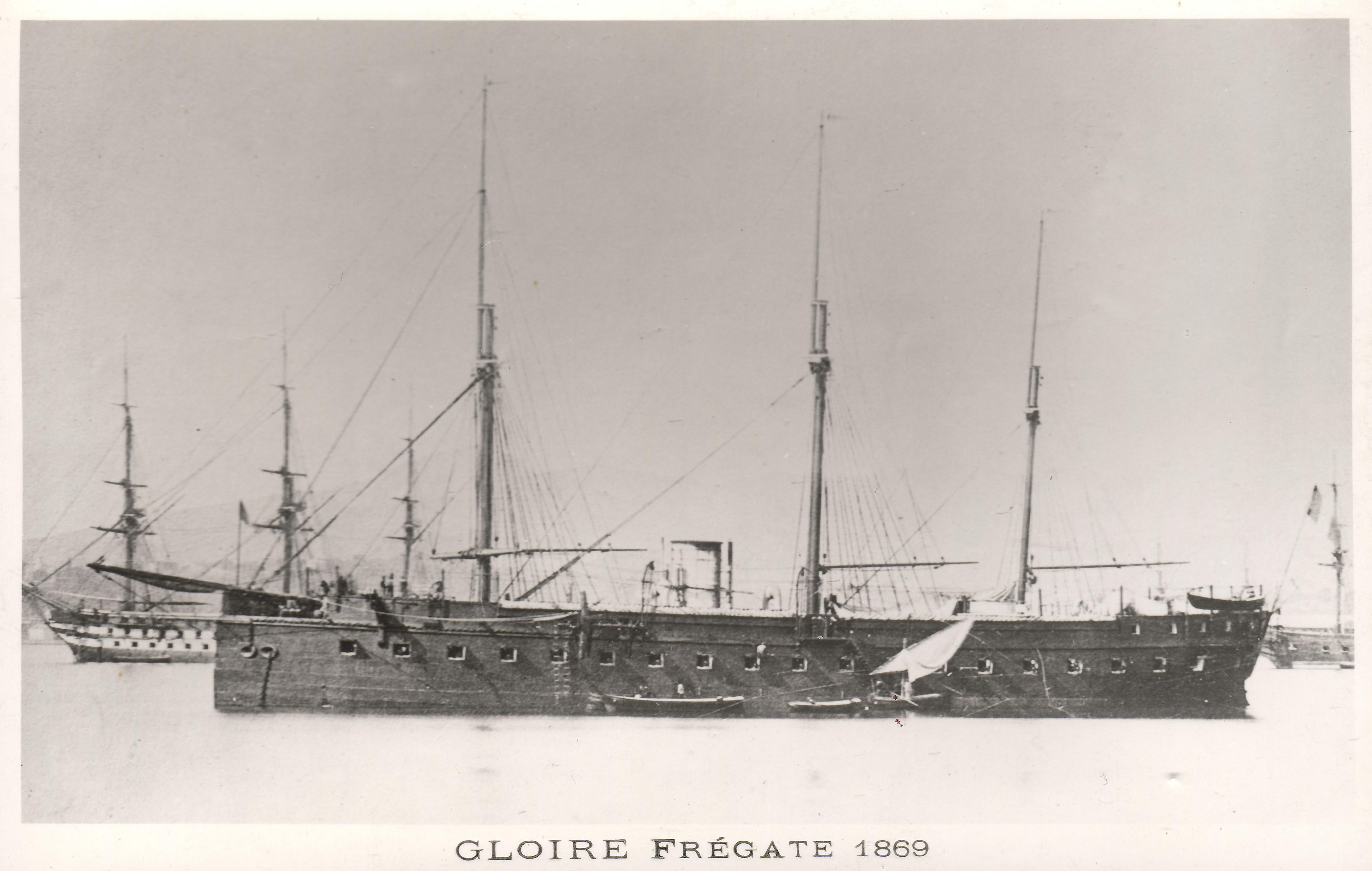
The idea of building an ironclad ship—that is a ship covered in a protective shell of metal—was not an idea created by the Confederacy. Nearly a decade prior, the Crimean War saw the first use of ironclad ships in the 1855 Battle of Kinburn.17 During which, three previously untested French ironclads bombarded a Russian fort from the sea for several hours, all while Russian artillery bounced off their iron shells.18 Additionally, the creation of the French ironclad La Gloire in 1858 dumped fuel on a naval construction race between the French and British, who constructed the HMS Warrior in 1859 in response.19
Notably for the story of the CSS Virginia, the Battle of Kinburn proved that ironclad ships were useful, but couldn’t assert they were revolutionary. Additionally, both the French and British ironclads hadn’t been tested outside of their ability to intimidate.


The Confederacy’s first plan to obtain ironclads of its own was to purchase them. On May 10, 1861, the Confederate Congress appropriated $2 million to buy armored vessels from either France or England.23 If an ironclad was not available for purchase, the plan was to make arrangements for one to be constructed in one of the two countries before being sent back to the Confederacy. Unfortunately, the man who was sent as the Confederate’s overseas agent failed in his quest, leaving Confederate Secretary of the Navy Malloy scrambling for next steps.24
Meanwhile, the blackened and burnt hull of the USS Merrimack was raised from the water on May 18, 1861 at a cost of $6,000.25 The idea of it being useful in the construction of an ironclad hadn’t yet occurred to anyone. Rather, it was raised both to move it out of the way and check if they could salvage the wreck as a more regular vessel. Since it was first scuttled—that is, deliberately sunk—before being set on fire, its lower hull and machinery were safe from the flames underwater and was relatively intact from below a certain point.26
On June 3, 1861, Mallory met with Lieutenant John Mercer Brooke to create an ironclad design for the Confederacy.27 The two met several more times, before Mallory also summoned Naval Constructor John Luke Porter and Chief Engineer William Price Williamson to discuss various ironclad designs. All four of the men met on the 23rd of June 1861, to which Brooke brought his previously created sketches and plans while Porter brought a model of a design for an ironclad ship he had thought of in 1846.28 The final design plan was likely the result of merging both of their designs together.
Unfortunately, there were no suitable engines already in existence in the South and it would take at least twelve months for them to build them from scratch. That is, unless—as Williamson suggested—they used the engines of the USS Merrimack as a base, reworking the machinery to fit their plans.29 The engines couldn’t be transferred to another vessel, so the systematic shape related issues of the USS Merrimack would persist, but all present agreed that it was the best way to quickly give the Confederacy an ironclad.30


Their final report was sent to Mallory on June 25, 1861.
“In obedience to your order, we have carefully examined and considered the various plans and propositions for constructing a shot-proof steam-battery, and respectfully report that in our opinion the steam-frigate Merrimac, which is in such condition from the effect of fire as to be useless for any other purpose without incurring a very heavy expense in her rebuilding, can be made an efficient vessel of that character, mounting 10 heavy guns, 2 pivot and 8 broadside guns of her original battery, and from the further consideration that we cannot procure a suitable engine and boilers for any other vessel without building them, which would occupy too much time, it would appear that this is our only chance to get a suitable vessel in short time. The bottom of the hull, boilers, and heavy and costly parts of the engine being but little injured, reduce the cost of construction to about one-third of the amount which would be required to construct such a vessel anew.”
“We cannot, without further examination make an accurate estimate of the cost of the proposed work, but think it will be about one hundred and ten thousand dollars…”
Mallory immediately approved of the plan and presented the project to the Confederate Congress. In his request, he reported that regularly reconstructing the USS Merrimack would cost $450,000, but conversion to an ironclad would only cost $175,523.34 Either way, the ship was useless in its state at the time.
The ironclad conversion project was approved and construction began by mid July.35
Conversion of the CSS Virginia
The first step of the conversion of the USS Merrimack into an ironclad was cutting away all of the burned portions of the ship, shortening the hull to a length of 262ft and 9 in.36 The first month went relatively smoothly and construction of the casemate—the iron shield that would be wrapped around the ship—began by August.37

The iron shield would cover the entire ship, sloping at a 35 degree angle to deflect enemy shells.39 To cover the weak point formed by the connection between the iron shield and the hull, the ends of the ship were submerged two feet below the waterline.40
Initially, the ship was to be covered in three layers of one-inch thick iron plate.41 However, tests with a mock up resulted in the shattering of all layers and the cannonball fired embedded five inches into the wood backing.42 A second test with two layers of two-inch thick iron plate fared much better, with the lower plate only cracked and the wood underneath left untouched.43 This design change would serve the ship well, noticeably contributing to the apparent invulnerability that would be displayed by the completed ironclad. The worst damage that the CSS Virginia would receive to its iron shield during the Battle of Hampton even ended up being notably less than what these tests presented, since not a single one of the lower plates were damaged over two days of battle.44
In addition, the ship was intended to have both the best and largest guns possible. Two 7-inch caliber rifled cannons and two 6.4-inch caliber rifled cannons were specially designed for the converted ironclad.45 They were some of the most powerful weapons produced during the American Civil War.
By the 1860s, the tactic of ramming had been almost completely abandoned for various reasons, mostly to do with the inherent danger of trying to physically collide with another ship actively firing heavy artillery at you without being accidentally sunk.46 As such, the converted ironclad didn’t originally include a ram in its design. However, steam power combined with an armored hull made ramming once again a viable technique and a 1,500-pound ram was added to the front of the ship.47
Throughout the entire conversion, the Confederacy found themselves chronically behind schedule. The Confederacy’s poor infrastructure combined with a lack of iron dramatically slowed the conversion, especially once they began to run out of iron entirely. As a result, the iron used began to come from any and every source it could be scrounged up from. Over three hundred tons of scrap lying around Gosport Navy Yard, along with over two thousand tons of obsolete guns, were sent to be melted down to make iron plates.48 Iron was shipped from other metal forging companies from all around the Confederacy. Even thirty tons of railroad rails were eventually taken from portions of the Baltimore & Ohio Railroad to be melted down.49
Then, it often took months for shipments of completed iron plates to make it to Gosport Navy Yard.50 The Confederacy’s railway system was overburdened by demands by the Army, who often took the train cars assigned to the Navy for their own uses.51 Even when the Army didn’t interfere, railroad tracks would often simply have too much traffic already moving on them to slide more in. It wasn’t until the 12th of February, 1862 that the final shipment of iron plates arrived.52 All the while, the conversion process itself was receiving an intrusive level of news coverage.
“It would seem that the hull of the Merrimac is being converted into an iron-cased battery. If so, she would be a floating fortress that will be able to defeat the whole Navy of the United States and bombard its cities. Her great size, strength, and powerful engine and speed, combined with the invulnerability secured by the iron casting, will make the dispersal or the destruction of the blockading fleet an easy task for her. Her immense tonnage will enable her to carry an armor proof against any projectile and she could entertain herself by throwing bombs into Fortress Monroe, even without risk. We hope soon to hear that she is ready to commence her avenging career on the seas.”
The Mobile Register, August 11, 186153

“To get into it would be impossible, and to make a hole in it would be impossible, and to make a whole in it with anything or machinery just the same. It will be covered with oak plank, two courses, each four inches thick, and then encased in railroad iron. Do you suppose a cannonball can have the courage to go through all of that. She will carry ten tremendous guns.”
The Lynchburg Virginian, September 12, 186155
During the American Civil War, the easiest way to gather information on the other side was often just to pick up one of their newspapers. Despite Confederate attempts at information security, Southern newspapers gave near constant updates on the ironclad conversion progress, hyping up the strength that the completed ship would have.56
Not only that, but the spectacle of the ironclad conversion lent itself to more dramatic methods of delivering information to the Union. Corked bottles containing information on the conversion were discovered in the Elizabeth River, intended to be pushed north by the tide towards the Union controlled Fort Monroe.57 At least one message was delivered after having been sewn inside the lining of a jacket.58 In one notable case, Mary Louvestre, a former slave, travelled to Washington D.C. after escaping from slavery and personally met with the Union Secretary of the Navy, who she gave papers taken directly from the desk of one of the engineers detailing the conversion process.59
Fortunately for the Confederacy, Northern newspapers were just as loose lipped when it came to the Union’s actions. Upon hearing about Confederate attempts to build an ironclad, the Union began pushing to make one of their own first. On August 3, 1861, Northern newspapers ran stories on Congress appropriating $1.5 million to construct an ironclad.60 Four days later, the Union Navy Department ran advertisements in dozens of newspapers, requesting proposals for ironclad designs.61 The construction of this other ironclad—which would become the USS Monitor—made in response to the Confederacy would begin on October 25, 1861.62
The race was truly on.
The converted USS Merrimack was scheduled to launch in late November 1861, but it wasn’t until the end of January 1862 that it was nearly completed.63 Almost two months behind schedule at that point, the Confederates entered a frantic pace, fearing that the Union would strike before they completed. The iron plating was finally finished on January 27, 1862, and the ironclad was floating in the water by February 13, 1862.64 Meanwhile, the New York Times ran an article about the successful launch of the USS Monitor on January 31, after having run an article on the state of the CSS Virginia itself the previous day.65 66
The CSS Virginia’s launch and rechristening on February 17, 1862 was an unimpressive affair, especially compared to the fanfare received under its former name of the USS Merrimack.67 Workers were still completing the conversion, while only one officer of the CSS Virginia was actually present for the event.
In just over a week, the conversion would be—technically, barring last minute concerns and arguments—complete. The Confederacy had built an ironclad ship of its own.


Footnotes:
- Quarstein, “The CSS Virginia: Sink Before Surrender,” 33. ↩︎
- Kinnaman, “Merrimack, The Biography of a Steam Frigate,” 275. ↩︎
- Kinnaman, “Merrimack, The Biography of a Steam Frigate,” 133. ↩︎
- Quarstein, “The CSS Virginia: Sink Before Surrender,” 51. ↩︎
- Quarstein, “The CSS Virginia: Sink Before Surrender,” 51. ↩︎
- Quarstein, “The CSS Virginia: Sink Before Surrender,” 51. ↩︎
- Quarstein, “The CSS Virginia: Sink Before Surrender,” 51. ↩︎
- Uniform and Dress of the Navy of the Confederate States. In: Richard Harwell. Uniform and Dress of the Army and Navy of the Confederate States of America (Philadelphia, PA: Ray Riling, 1960), p 61. ↩︎
- Still, “The Confederate Navy: The Ships, Men and Organization, 1861-65,” 21. ↩︎
- Still, “The Confederate Navy: The Ships, Men and Organization, 1861-65,” 10. ↩︎
- Still, “The Confederate Navy: The Ships, Men and Organization, 1861-65,” 11. ↩︎
- Still, “The Confederate Navy: The Ships, Men and Organization, 1861-65,” 22. ↩︎
- Still, “The Confederate Navy: The Ships, Men and Organization, 1861-65,” 12. ↩︎
- Still, “The Confederate Navy: The Ships, Men and Organization, 1861-65,” 12. ↩︎
- Still, “The Confederate Navy: The Ships, Men and Organization, 1861-65,” 12. ↩︎
- Quarstein, “The CSS Virginia: Sink Before Surrender,” 58. ↩︎
- Quarstein, “The CSS Virginia: Sink Before Surrender,” 60. ↩︎
- Quarstein, “The CSS Virginia: Sink Before Surrender,” 60. ↩︎
- Quarstein, “The CSS Virginia: Sink Before Surrender,” 61. ↩︎
- Wikimedia Commons contributors, “File:General View of the Bombardment of Kinburn. Illustration for The Illustrated Times, 10 November 1855.png,” Wikimedia Commons, https://commons.wikimedia.org/w/index.php?title=File:General_View_of_the_Bombardment_of_Kinburn._Illustration_for_The_Illustrated_Times,_10_November_1855.png&oldid=743074828 (accessed March 16, 2026). ↩︎
- Wikimedia Commons contributors, “File:LaGloirePhotograph.jpg,” Wikimedia Commons, https://commons.wikimedia.org/w/index.php?title=File:LaGloirePhotograph.jpg&oldid=939474702 (accessed March 16, 2026). ↩︎
- Wikimedia Commons contributors, “File:HMS Warrior (1860).jpg,” Wikimedia Commons, https://commons.wikimedia.org/w/index.php?title=File:HMS_Warrior_(1860).jpg&oldid=670050099 (accessed March 16, 2026). ↩︎
- Quarstein, “The CSS Virginia: Sink Before Surrender,” 63. ↩︎
- Still, “The Confederate Navy: The Ships, Men and Organization, 1861-65,” 14. ↩︎
- Quarstein, “The CSS Virginia: Sink Before Surrender,” 56. ↩︎
- Kinnaman, “Merrimack, The Biography of a Steam Frigate,” 280. ↩︎
- Johnson, “Battles and Leaders of the Civil War,” 715. ↩︎
- Quarstein, “The CSS Virginia: Sink Before Surrender,” 66. ↩︎
- Johnson, “Battles and Leaders of the Civil War,” 716. ↩︎
- Johnson, “Battles and Leaders of the Civil War,” 716. ↩︎
- Porter, John L. (John Luke), 1813-1893. Naval architectural plan showing three views of CSS Virginia. Jun. 1861 – Jun. 1862. John Luke Porter Papers. 0850-s2-fos2-i9. East Carolina University Digital Collections. https://digital.lib.ecu.edu/4498. Accessed 16 Mar. 2026. ↩︎
- Porter, John L. (John Luke), 1813-1893. John L. Porter’s naval architectural notebook. 1860-1878. John Luke Porter Papers. 0850-s1-b2-fa-i1. East Carolina University Digital Collections. https://digital.lib.ecu.edu/3578. Accessed 16 Mar. 2026. ↩︎
- Johnson, “Battles and Leaders of the Civil War,” 716-7. ↩︎
- Quarstein, “The CSS Virginia: Sink Before Surrender,” 68. ↩︎
- Quarstein, “The CSS Virginia: Sink Before Surrender,” 68. ↩︎
- Johnson, “Battles and Leaders of the Civil War,” 717. ↩︎
- Quarstein, “The CSS Virginia: Sink Before Surrender,” 71. ↩︎
- Johnson, “Battles and Leaders of the Civil War,” 717. ↩︎
- Johnson, “Battles and Leaders of the Civil War,” 717. ↩︎
- Johnson, “Battles and Leaders of the Civil War,” 717. ↩︎
- Quarstein, “The CSS Virginia: Sink Before Surrender,” 74. ↩︎
- Quarstein, “The CSS Virginia: Sink Before Surrender,” 75-6. ↩︎
- Quarstein, “The CSS Virginia: Sink Before Surrender,” 76. ↩︎
- Johnson, “Battles and Leaders of the Civil War,” 717. ↩︎
- Quarstein, “The CSS Virginia: Sink Before Surrender,” 79. ↩︎
- Quarstein, “The CSS Virginia: Sink Before Surrender,” 81. ↩︎
- Quarstein, “The CSS Virginia: Sink Before Surrender,” 81. ↩︎
- Quarstein, “The CSS Virginia: Sink Before Surrender,” 77. ↩︎
- Quarstein, “The CSS Virginia: Sink Before Surrender,” 77. ↩︎
- Quarstein, “The CSS Virginia: Sink Before Surrender,” 77. ↩︎
- Quarstein, “The CSS Virginia: Sink Before Surrender,” 77. ↩︎
- Quarstein, “The CSS Virginia: Sink Before Surrender,” 78. ↩︎
- Quarstein, “The CSS Virginia: Sink Before Surrender,” 108. ↩︎
- “NH 314 CSS Virginia (1862-1862).” ↩︎
- Quarstein, “The CSS Virginia: Sink Before Surrender,” 109-10 ↩︎
- Quarstein, “The CSS Virginia: Sink Before Surrender,” 109. ↩︎
- Quarstein, “The CSS Virginia: Sink Before Surrender,” 110. ↩︎
- Quarstein, “The CSS Virginia: Sink Before Surrender,” 111. ↩︎
- Holloway, “Our Little Monitor : The Greatest Invention of the Civil War,” 42. ↩︎
- Holloway, “Our Little Monitor : The Greatest Invention of the Civil War,” 43. ↩︎
- Holloway, “Our Little Monitor : The Greatest Invention of the Civil War,” 44. ↩︎
- New York Times, “Lanuch of the Ericsson Battery,” January 31, 1862. ↩︎
- Quarstein, “The CSS Virginia: Sink Before Surrender,” 96. ↩︎
- Quarstein, “The CSS Virginia: Sink Before Surrender,” 97. ↩︎
- New York Times, “Lanuch of the Ericsson Battery,” January 31, 1862. ↩︎
- New York Times, “NEWS FROM FORTRESS MONROE.: The Rebel Steamer Merrimac at Norfolk Expected Attack Upon Savannah,” January 30, 1862. ↩︎
- Quarstein, “The CSS Virginia: Sink Before Surrender,” 97. ↩︎
- “NH 57830 CSS Virginia (1862-1862).” ↩︎
- Holloway, “Our Little Monitor : The Greatest Invention of the Civil War,” 246. ↩︎
- Holloway, “Our Little Monitor : The Greatest Invention of the Civil War,” 247. ↩︎
References for the Destruction of Gosport Navy Yard Timeline:
- Quarstein, “The CSS Virginia: Sink Before Surrender,” 36.
- Kinnaman, “Merrimack, The Biography of a Steam Frigate,” 275.
- Quarstein, “The CSS Virginia: Sink Before Surrender,” 37.
- Quarstein, “The CSS Virginia: Sink Before Surrender,” 37.
- Kinnaman, “Merrimack, The Biography of a Steam Frigate,” 276.
- Kinnaman, “Merrimack, The Biography of a Steam Frigate,” 275.
- Quarstein, “The CSS Virginia: Sink Before Surrender,” 37.
- Kinnaman, “Merrimack, The Biography of a Steam Frigate,” 276.
- Quarstein, “The CSS Virginia: Sink Before Surrender,” 40.
- Kinnaman, “Merrimack, The Biography of a Steam Frigate,” 277.
- Kinnaman, “Merrimack, The Biography of a Steam Frigate,” 277.
- Quarstein, “The CSS Virginia: Sink Before Surrender,” 41.
- Kinnaman, “Merrimack, The Biography of a Steam Frigate,” 277-8.
- Kinnaman, “Merrimack, The Biography of a Steam Frigate,” 278.
- Quarstein, “The CSS Virginia: Sink Before Surrender,” 41.
- Kinnaman, “Merrimack, The Biography of a Steam Frigate,” 278.
- Kinnaman, “Merrimack, The Biography of a Steam Frigate,” 278.
- Quarstein, “The CSS Virginia: Sink Before Surrender,” 44.
- Quarstein, “The CSS Virginia: Sink Before Surrender,” 45.
- Kinnaman, “Merrimack, The Biography of a Steam Frigate,” 278-9.
- Quarstein, “The CSS Virginia: Sink Before Surrender,” 47.
- Kinnaman, “Merrimack, The Biography of a Steam Frigate,” 279.
- Kinnaman, “Merrimack, The Biography of a Steam Frigate,” 279.
- Quarstein, “The CSS Virginia: Sink Before Surrender,” 48.