

Photo of the Lusitania
THE WAR AT SEA DURING THE FIRST WORLD WAR (Q 43227) The RMS LUSITANIA which was sunk by the German submarine U 20 on 7 May 1915. Copyright: © IWM. Original Source: http://www.iwm.org.uk/collections/item/object/205124918
The RMS Lusitania often called “the greyhound of the seas” due to being the fastest and most luxurious ship of her day.2 Was attacked off the coast of Ireland on May 7, 1915 by a German U-boat. She was torpedoed and disappeared under the waves in under twenty minutes. This shipwreck claimed the lives of 1,198 people, 128 of those lives being American.3 While her sinking is often reduced to a footnote in the context of the first World War she represents the end of “Gentlemanly Warfare” at sea. Analyzing the ship though its manufacturing, sinking, and exploration changes the understanding of the ships history and significance. She reveals how the deep sea became a contested archive for national secrets and military justification.


Throughout this exhibit, you will learn about the historical context of World War 1 that led to the sinking of the Lusitania. Additionally, you will learn about the aftermath of this tragedy, including how it contributed to the U.S. involvement in World War 1. Finally, you will learn about the archeology of the wreck, which includes recovered artifacts and famous divers who saw the wreck.
“Had he [Wilson] acted with reasonable firmness… the thousand men, women and children who were murdered on the Lusitania on the high seas would be alive today.”
Theodore Roosevelt, Theodore Roosevelt on the sinking of the Lusitania, June 21, 1915
Engineering and the German Perspective
The first section of the exhibit establishes the historical and industrial context, the difficulties of constructing such a massive boat, and the ultimate success of the vessel. Equipped with revolutionary Parsons steam turbines and four smoke stacks, the ship was designed for unprecedented speed, which was believed to be both its primary defense against naval threats, but also its primary weapon if converted into a warship. This section also examines the conflict from the German Imperial Navy’s viewpoint. To the German command, the Lusitania was a legitimate military target, an Armed Merchant Cruiser carrying war matériel through a declared war zone.

Archaeology and Ownership
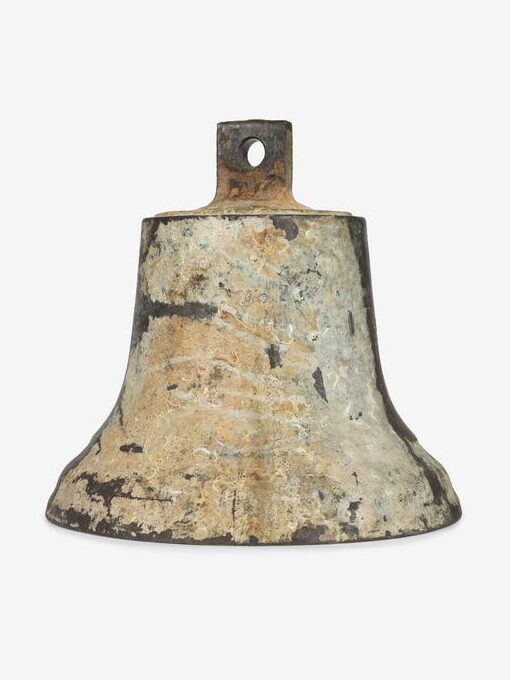
The middle section focuses on the ship as it is today, on the ocean floor. It is located 93 meters down off the coast of Ireland in the Celtic Sea.4 The exhibit details the history of exploration, from the pioneering expeditions to modern sonar mapping. It examines the details of the most famous expeditions to the wreck, like Robert D. Ballard’s in 1993.5 Furthermore, the exhibit highlights objects that were found and recovered from the wreck and where they are located today, like the propellors, bell, and others. Lastly, it focuses on the question of ownership disputes between private salvors and the Irish government, and how this has changed over time. There is an in depth exploration of the Underwater Heritage Order (UHO), which examines this debate.




The Path to War and Global Aftermath
The final section investigates the geopolitical ripples that eventually drew the United States into World War I. While the U.S. did not declare war immediately in 1915, the death of 128 American citizens fundamentally eroded the nation’s commitment to total neutrality.6 The exhibit tracks the diplomatic “Lusitania Notes” and the rise of the Preparedness Movement, which modernized the U.S. military in anticipation of conflict.7 By analyzing recruitment posters and political rhetoric, shows how the shipwreck was transformed into a powerful tool for the United States to become involved in the war.
About the Authors
Emily Vogel
Emily is a first-year student at Carleton College, she is from Blaine, Minnesota. She is a prospective Biology and/or Psych major. For this research project she researched the aftermath of the Lusitania sinking in the Celtic Sea, and how the sinking affected the United States and the course of WWI.
Thomas Ivey
Thomas is a first year student at Carleton College, he is from Wenatchee, Washington. He is a prospective Physics major. For this project, he researched how the Lusitania came to be and the context of its sinking, as well as the general context for the U.S. entering WWI.
Finley Weiler
Finley is a first year student at Carleton College, and she is from Evanston, Illinois. She is currently undecided, but is a prospective linguistics or mathematics major. For this shipwreck project, she researched the actual wreck of the ship. She researched the artifacts, famous expeditions, and archeology of the shipwreck.
Footnotes
- “The War at Sea during the First World War | Imperial War Museums,” Imperial War Museum, accessed March 16, 2026, https://www.iwm.org.uk/collections/item/object/205124918. ↩︎
- “Why Germany Sank RMS Lusitania | Imperial War Museums,” Imperial War Museum, accessed March 14, 2026, https://www.iwm.org.uk/history/why-germany-sank-rms-lusitania. ↩︎
- “Research Guides: RMS Lusitania: A Resource Guide: Introduction,” Introduction – RMS Lusitania: A Resource Guide – Research Guides at Library of Congress, accessed March 13, 2026, https://guides.loc.gov/lusitania. ↩︎
- “Finding and Diving the Lusitania,” Lusitania Museum, https://lusitania.org/finding-and-diving-the-lusitania/ ↩︎
- Robert D. Ballard, Exploring the Lusitania: probing the mysteries of the sinking that changed history (Madison Press Books, 1995), 14. ↩︎
- “America Enters the Great War.” National Archives and Records Administration. Accessed March 14, 2026. https://www.archives.gov/publications/prologue/2017/spring/wwi-america-enters. ↩︎
- “Boston Navy Yard and the ‘Great War,’ 1914-1918 (U.S. National Park Service),” National Parks Service, accessed March 15, 2026, https://www.nps.gov/articles/bny_wwi.htm. ↩︎