
The CSS Virginia has been one of the most influential ships when it comes to technological advancement in naval warfare. Previously known as the USS Merrimack, this converted ironclad ship was the first of its kind to be used in naval warfare during the Civil War.1 Although European countries had simultaneously begun to explore the world of ironclad ships, the Battle of Hampton Roads, in which the CSS Virginia fought the USS Monitor, displayed the true strength of ironclad ships compared to wooden ones.2 The CSS Virginia would sink just months after its encounter with the Monitor, as the Confederacy hoped to keep ironclad technology out of the hands of the Union.3 By examining the historical events that led up to the sinking of the CSS Virginia, it is possible to see just how important ironclads were to naval warfare. This poses the question: How and why did the CSS Virginia’s ironclad have such a lasting impact on naval warfare?
The Story:
On April 20, 1861, the Union scuttled the USS Merrimack in hopes of keeping it out of Confederate hands.4 However, one month later, the Confederacy raised the Merrimack from the water, finding that the machinery and hull were undamaged.5 At the time, the Confederacy lacked an army that could counter that of the Union. In hopes of salvaging their position in the war, the Confederacy began conversion of the Merrimack into an ironclad ship in July of 1861, finishing in February 1862, when it was rechristened the CSS Virginia.6

The CSS Virginia would prove itself during the Battle of Hampton Roads on March 8th-9th, 1862, by demonstrating the power of armored ships. The Virginia would face three of the Union’s wooden ships during its first day of battle on March 8th. The damage the CSS Virginia was able to inflict almost instantly was something that had never been seen before, sinking both the USS Cumberland and the USS Congress almost immediately.8 What shocked the public the most about this encounter was that the CSS Virginia seemed to take almost no damage itself, despite being fired at.9 Its pure strength would be once again showcased on March 9th, when the CSS Virginia confronted the Union’s ironclad, the USS Monitor. For several hours, the two ships exchanged heavy cannonball fire, but neither ship could damage the other.10 The battle ended in a draw as both ships retreated after almost five hours of fighting.
The Battle of Hampton Roads would encourage countries around the world to invest in ironclad ships.11 Although the French and British had already constructed ironclads of their own prior to the Civil War, the Battle of Hampton Roads would be the first time ironclads were used against each other in battle.12 Seeing as both came out relatively unscathed, proved that ironclad ships were worth investing in. Unfortunately, the CSS Virginia had a relatively short life span, as it was sunk just months after its construction.
The Wreck:
The CSS Virginia was wrecked on May 11th, 1862, just two months after its debut. As the Union was advancing into Confederate territory, the Confederacy hoped to prevent the Union from capturing the CSS Virginia and using it themselves. To prevent this, the crew aboard the CSS Virginia set it aflame and sank it, hoping to destroy as much of the ship as possible.13 Today, very few remains of the CSS Virginia, but its legacy still lives on.
Despite its short lifespan, naval warfare today would not be the same without the Battle of Hampton Roads. Through this exhibit, we will dive deeper into the history of the CSS Virginia, fleshing out what made the ironclad ship the CSS Virginia so important and why its legacy is still visible today, answering the question of how the CSS Virginia had such a lasting impact on naval warfare.
Present Day Ironclads – Ironclads in Pop Culture:
The story of the CSS Virginia and the USS Monitor has also influenced current popular culture. The dramatic clash between these ships during the Battle of Hampton Roads captured public imagination because it represented the moment when traditional wooden ships gave way to armored steam-powered warships. As a result, the battle and the ships involved have appeared in books, films, and video games that portray the event for modern audiences.
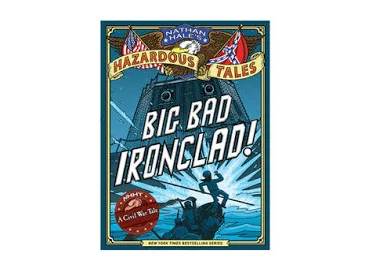
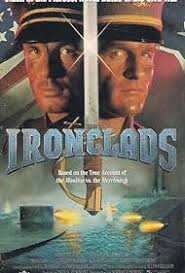
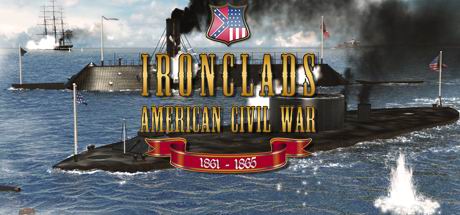
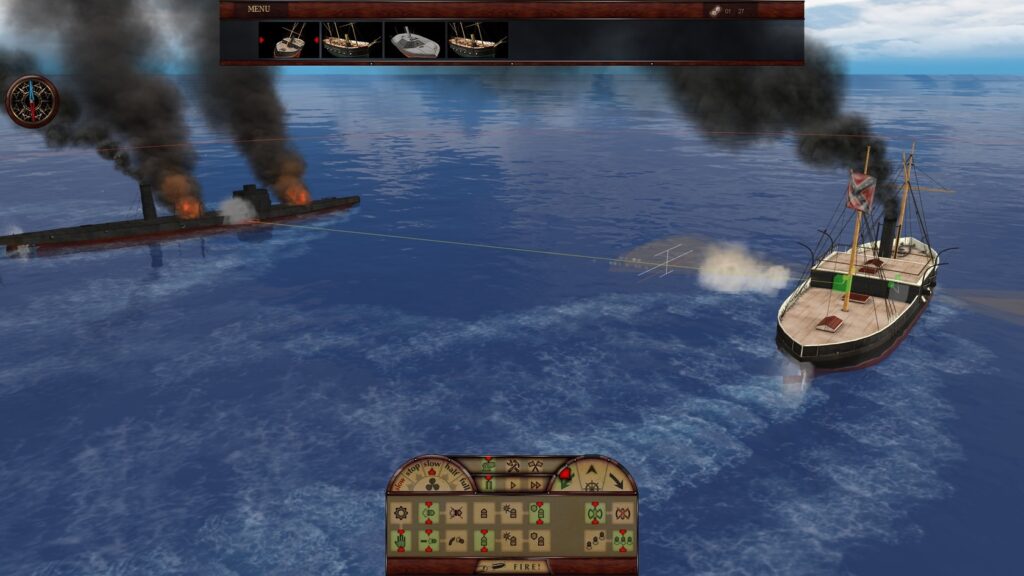
One example of this appears in the graphic history book Big Bad Ironclad! by Nathan Hale. The book retells the story of the ironclads and the events leading to their famous duel in a comic format designed for younger readers.14 The book introduces audiences to the technological innovation of ironclads and the significance of the Battle of Hampton Roads. The narrative does condense and exaggerate some aspects of the story, but it is still able to reinterpret a major historical event for younger generations. Ironclads have also appeared in film, such as the television movie Ironclads (1991), which dramatizes the construction of the Monitor and Virginia and the events leading up to their battle. The film emphasizes the tension during the civil war and the race to be the first to modernize warships.15 Naval warfare video games have similarly incorporated ironclads into their portrayals of nineteenth-century combat. Games such as Ironclads: American Civil War on Steam allow players to command or design armored warships inspired by historical ironclads. These games often draw upon the visual design and reputation of ships like the CSS Virginia and USS Monitor.16 The mechanics of the gameplay can be adjusted for practical reasons, but the inclusion of ironclads in games like these demonstrates the continued fascination with the ironclads.
Test Your Luck as the Captain of the CSS Virginia:
In hopes of providing some context on the Battle of Hampton Roads, we have constructed a game that replicates the CSS Virginia’s battle against the Union’s wooden ships. The CSS Virginia sank two major Union ships, the USS Cumberland and the USS Congress, and severely damaged the USS Minnesota.17 This game, although a highly simplified version of the events that happened on March 8th, 1862, shows the relative strength of the CSS Virginia and, therefore, the strength ironclads possess in a broader sense.
BATTLE OF HAMPTON ROADS
Command the ironclad CSS Virginia. Break the Union blockade by sinking 10 wooden frigates.
Controls: Arrows to Steer | Space to Fire Broadsides
About the Authors:
Felix Cusimano
Felix Cusimano is a first-year student at Carleton College from Barrington, Illinois. He is currently undecided on future major. For this project, he focused on the history of the USS Merrimack from creation to destruction, along with conversion into the ironclad CSS Virginia.
Oscar Peche
Oscar Peche is a first year student at Carleton College from Salt Lake City, Utah, planning to major in Math and French. He also is on the golf team at Carleton. For this project, he focused on the CSS Virginia’s brief career as an ironclad, specifically, its impact in the Battle of Hampton Roads.
Miren Creswell
Miren Creswell is a first-year student at Carleton College from San Francisco, California. She is planning on majoring in Biology with a minor in Public Policy. For this project, she focused on the lasting impacts the CSS Virginia had on naval warfare, and how recovered artifacts from the wreck highlight the ironclad’s legacy.
- Rafuse, “‘CSS Virginia’ Encyclopedia Virginia.” ↩︎
- Rafuse, “‘CSS Virginia’ Encyclopedia Virginia.” ↩︎
- Rafuse, “‘CSS Virginia’ Encyclopedia Virginia.” ↩︎
- Quarstein, The CSS Virginia: Sink Before Surrender, 47 ↩︎
- Quarstein, The CSS Virginia: Sink Before Surrender, 56. ↩︎
- Quarstein, The CSS Virginia: Sink Before Surrender, 68-97 ↩︎
- Davidson, J. O., “USS Monitor vs. CSS Virginia,” facsimile print, Wikimedia Commons ↩︎
- U.S. Naval History and Heritage Command. “CSS Virginia Destroys USS Cumberland and USS Congress — 8 March 1862.” ↩︎
- U.S. Naval History and Heritage Command. “CSS Virginia Destroys USS Cumberland and USS Congress — 8 March 1862.” ↩︎
- Holloway and White, “Our Little Monitor: The Greatest Invention of the Civil War,” 103 ↩︎
- Konstam, “European Ironclads 1860-75,” 4 ↩︎
- Konstam, “European Ironclads 1860-75,” 4 ↩︎
- Rafuse, “‘CSS Virginia’ Encyclopedia Virginia.” ↩︎
- Nathan Hale, Big Bad Ironclad!: A Civil War Steamship Showdown (New York: Amulet Books, 2012). ↩︎
- Ironclads, IMDb, accessed March 12, 2026. ↩︎
- Ironclads: American Civil War, developed by Totem Games and published by Strategy First (2009), Steam, accessed March 12, 2026. ↩︎
- Rafuse, “‘CSS Virginia’ Encyclopedia Virginia.” ↩︎