
Early Service and Command
By February 1862, construction was largely complete, and the vessel was officially commissioned into the Confederate Navy as the CSS Virginia.1 This transformation marked one of the earliest large-scale attempts to convert a traditional wooden warship into an armored ironclad.
The CSS Virginia was placed under the command of Franklin Buchanan, a former U.S. Navy officer who had joined the Confederacy.2 Buchanan oversaw the final preparations for combat in early 1862. Training exercises were limited due to mechanical problems and the ship’s deep draft, which restricted its movement in shallow waters.3
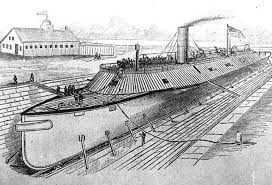
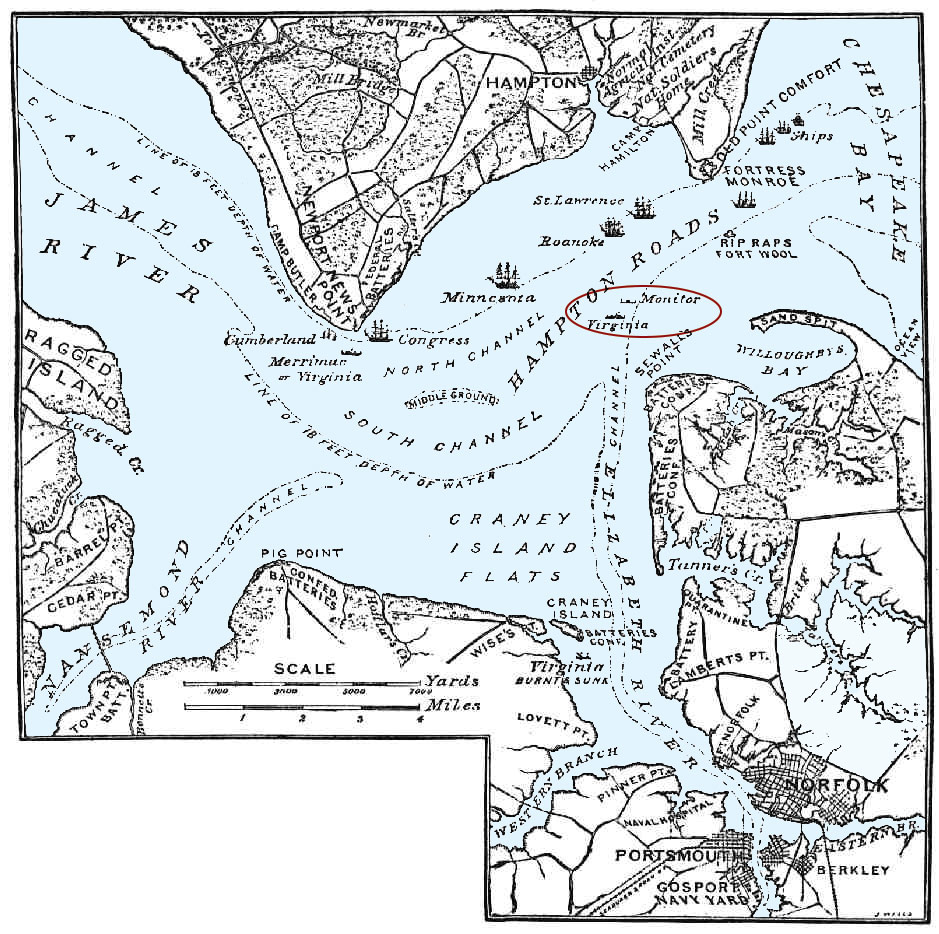
The Virginia was stationed in the waters of Hampton Roads, a strategically vital region where several Union warships maintained a blockade of Confederate ports. Control of this area was essential for trade, transportation, and military operations.
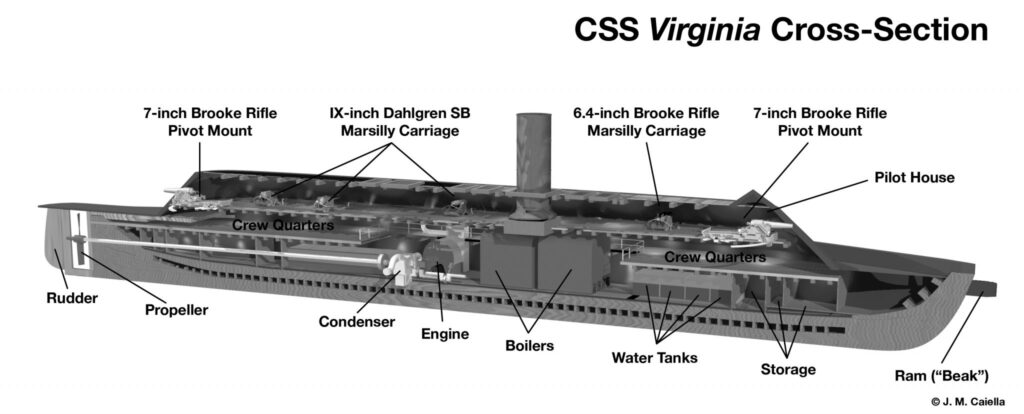
Despite its incomplete testing and mechanical limitations, Confederate leaders believed that the Virginia could break the Union blockade.5 Its thick armor and heavy guns made it largely immune to the wooden warships that dominated naval fleets at the time.
“She is thought to be almost impregnable, and French officers who have visited her have pronounced her a more formidable engine of war than either the Warrior or La Gloire.”
“Description of the Merrimack,” The Charleston Mercury (Charleston, SC), March 8, 1862, 1.
By early March 1862, Buchanan received orders to engage the Union fleet and test the ironclad’s capabilities in battle.6
Battle at Hampton Roads
The Battle of Hampton Roads
March 8–9, 1862 — The Battle that Revolutionized Naval Warfare
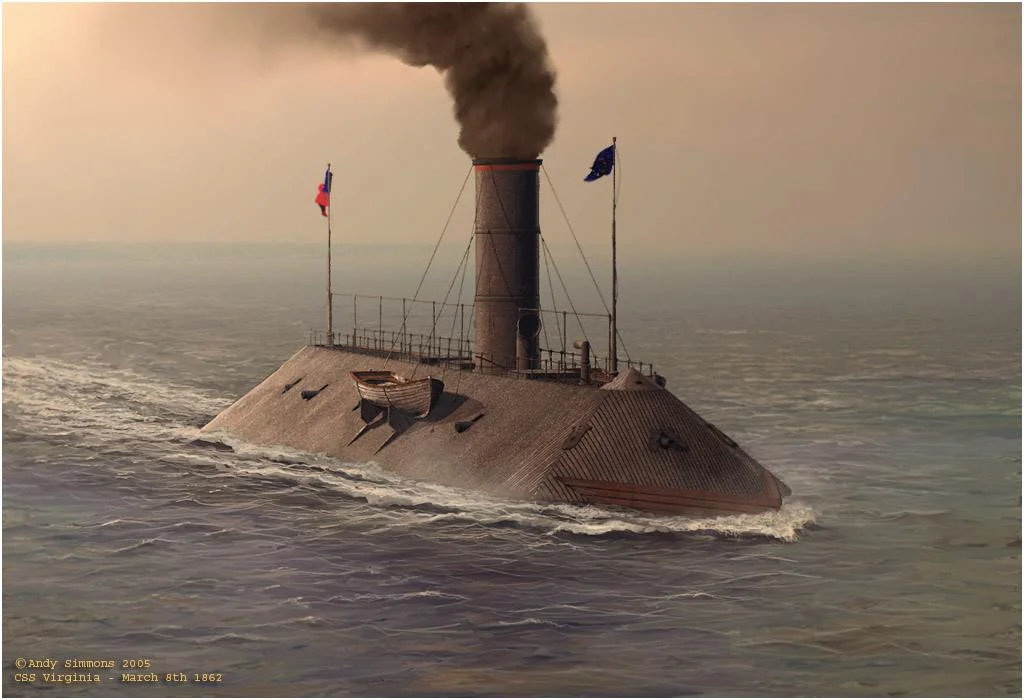
CSS Virginia Advances
The Confederate ironclad CSS Virginia enters Hampton Roads to challenge the Union blockade.
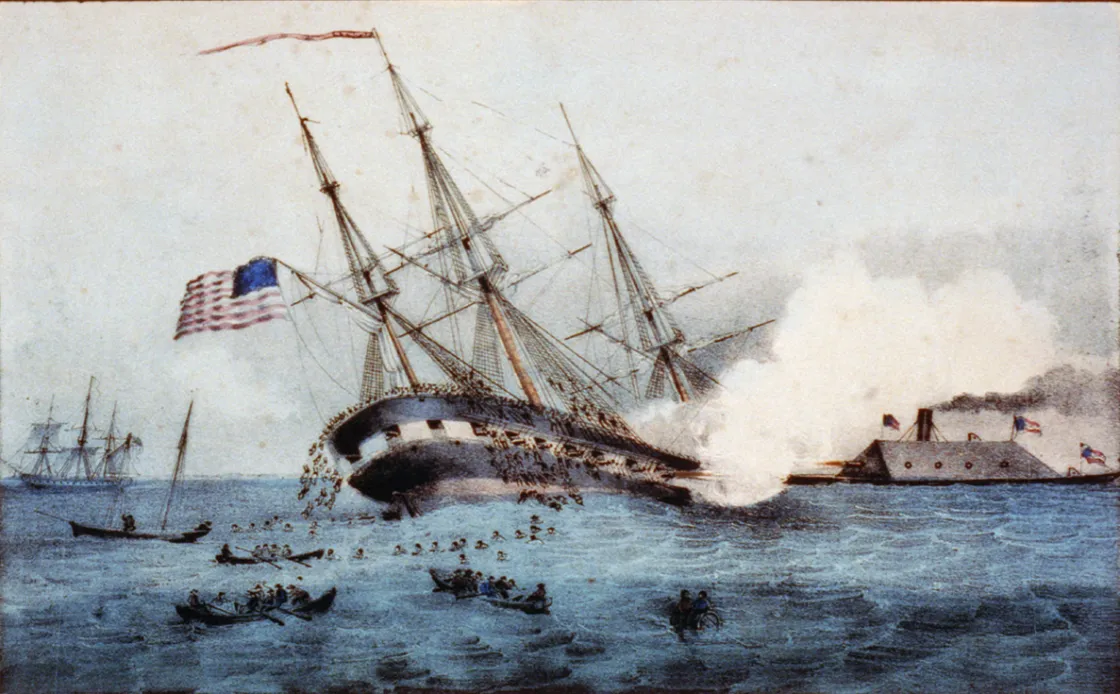
USS Cumberland Sinks
Virginia rams the wooden USS Cumberland and sinks the USS Congress, proving iron defeats wood.
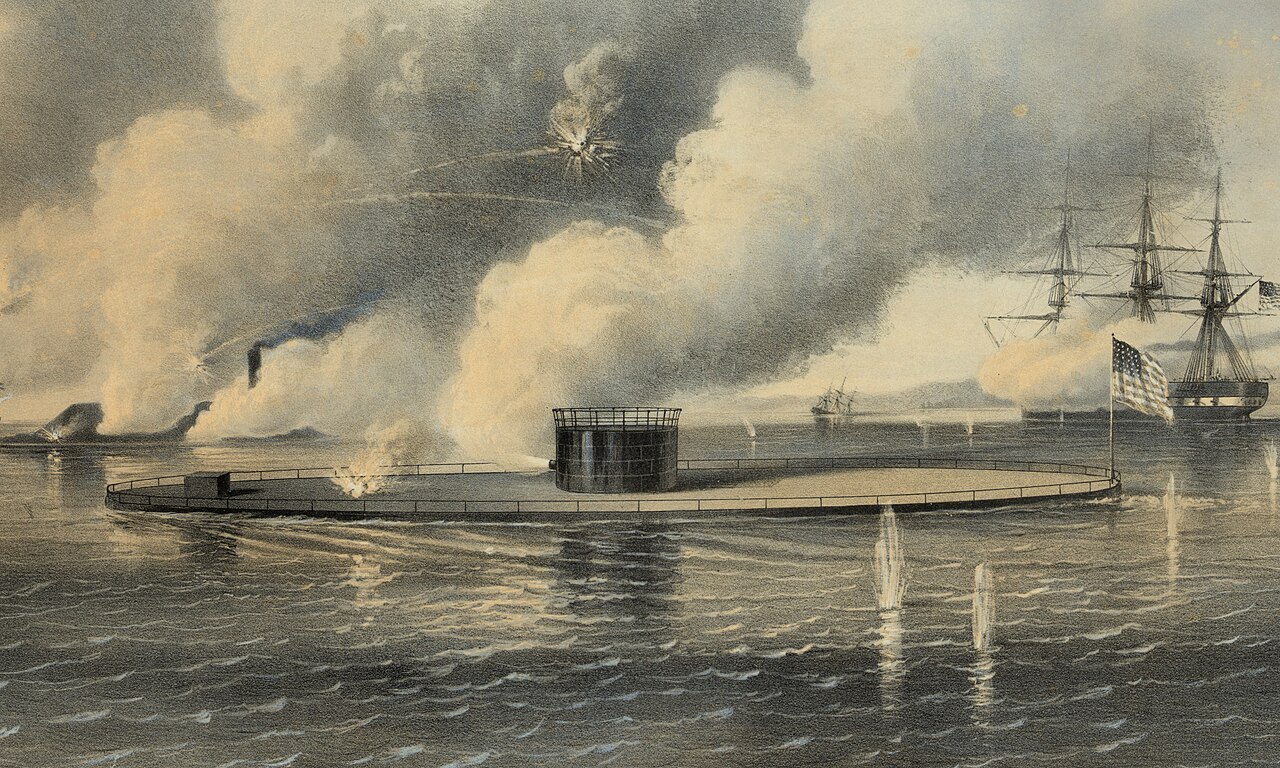
The USS Monitor Arrives
The Union’s revolutionary ironclad arrives overnight to defend the fleet.
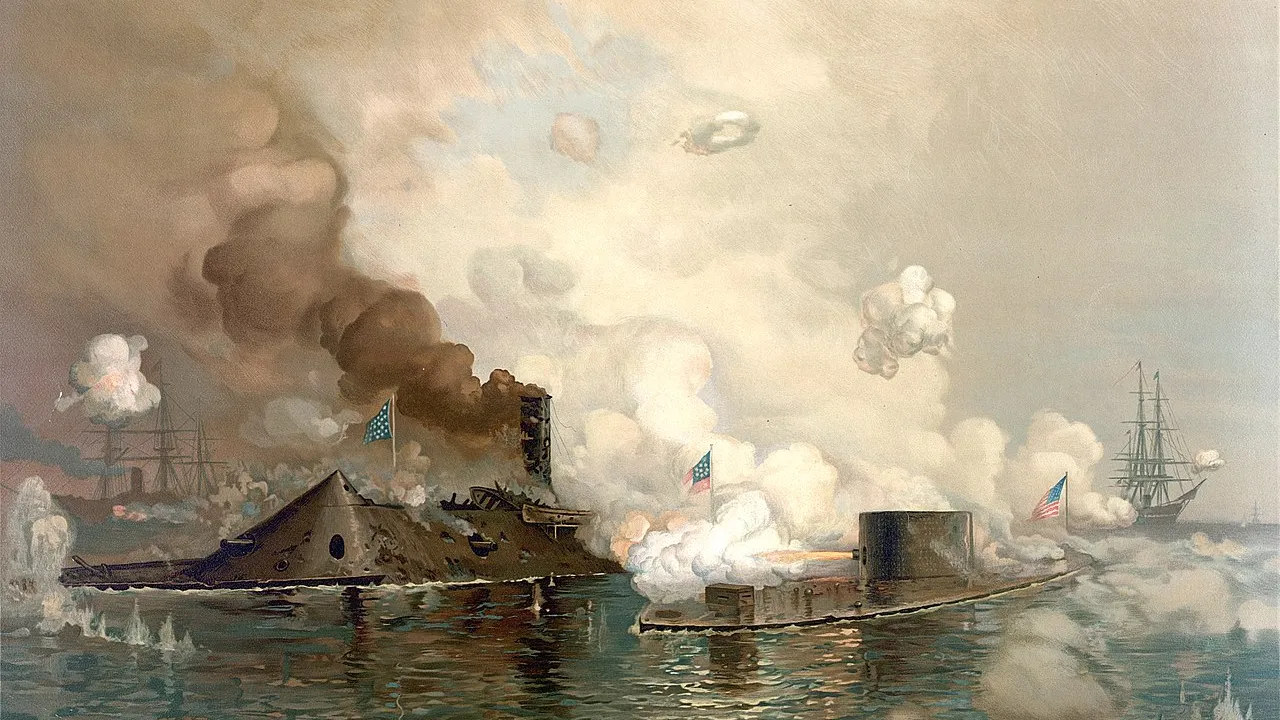
Ironclads Clash
On March 9, 1862, Monitor and Virginia engage in the first ironclad duel in history.
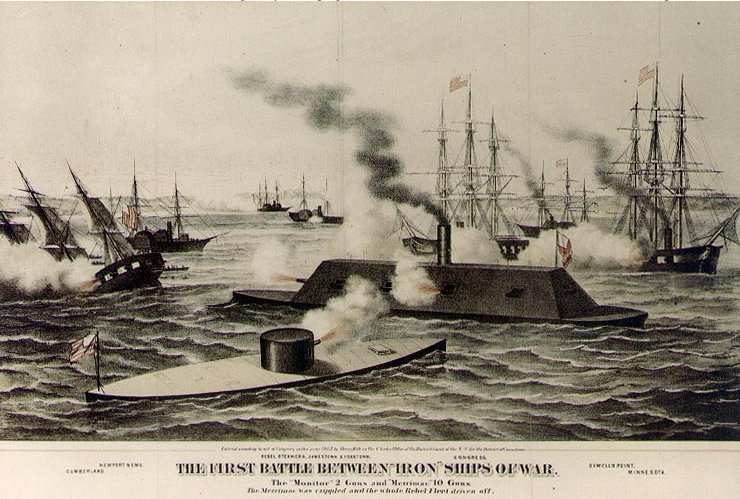
A New Era Begins
The battle ends in a draw, but wooden navies worldwide become obsolete overnight.
On March 8, 1862, the CSS Virginia sailed from Norfolk into Hampton Roads and attacked the Union squadron.8 The ironclad first targeted the USS Cumberland, ramming it with its iron prow and causing it to sink.9 It then engaged the USS Congress, which was eventually set ablaze and destroyed.10
Union cannon fire proved largely ineffective against the Virginia’s armor. Shot and shell either bounced off or caused minimal damage.11 The Confederate vessel demonstrated, for the first time on a large scale, that ironclads could dominate traditional wooden warships.
During the battle, Buchanan was wounded by small-arms fire and forced to relinquish command.13 Leadership passed to Catesby ap Roger Jones, who continued the engagement until nightfall.14
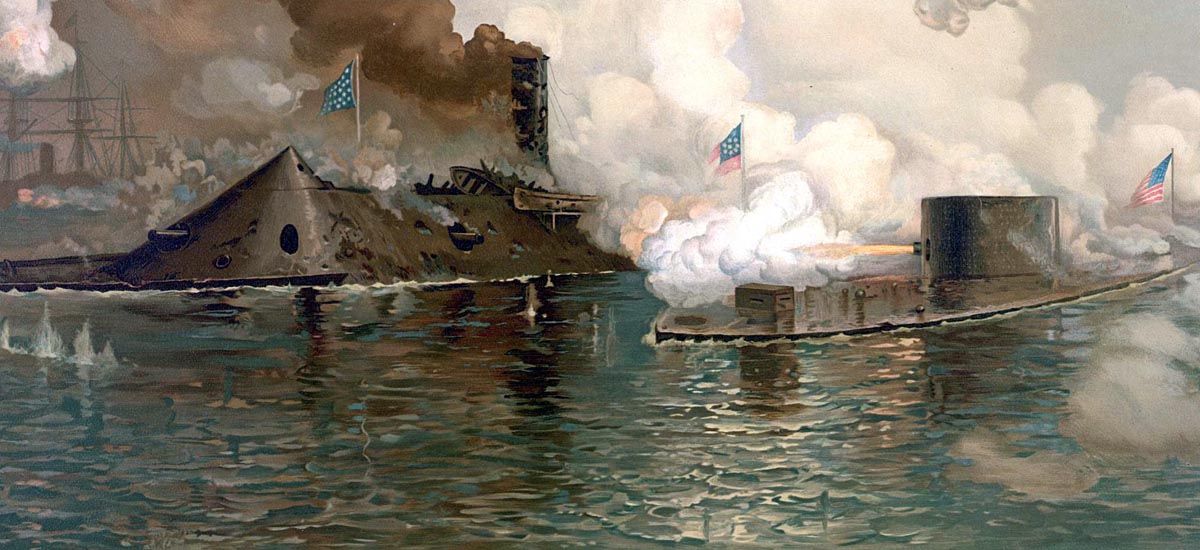
The following morning, March 9, the Virginia returned to complete its attack but encountered the newly arrived Union ironclad USS Monitor, commanded by John L. Worden.15 16The two armored ships engaged in a historic duel lasting several hours.17 Neither vessel was able to destroy the other, and the battle ended in a tactical draw.
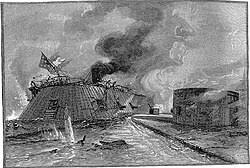
Although inconclusive, the engagement marked a turning point in naval warfare, signaling the end of wooden warship dominance and the rise of ironclads.
As the battle unfolded on March 8, several other Union ships became targets or suffered damage during the Virginia’s assault. One of the most significant was the USS Minnesota. While maneuvering to support the Cumberland and Congress, the Minnesota ran aground in the shallow waters of Hampton Roads, leaving it stranded and vulnerable.19 Unable to move and presenting a large stationary target, the ship became a primary objective for the Virginia as evening approached. The ironclad advanced toward the grounded vessel and opened fire, striking it repeatedly with heavy shells.20 Although the Minnesota’s crew returned fire with everything they had, their cannonballs bounced harmlessly off the iron armor of the Confederate ship. Darkness and falling tides ultimately prevented the Virginia from closing in for a decisive attack that evening, sparing the Minnesota from destruction.21
Other Union vessels in the area also faced the threat of the ironclad. The steam frigate USS Roanoke and the sailing frigate USS St. Lawrence attempted to assist the embattled Union ships but were hampered by shallow water and the risk of grounding.22 The St. Lawrence eventually ran aground while trying to approach the fight and came under fire from Confederate shore batteries supporting the Virginia.23 Though it was struck multiple times, it avoided the catastrophic damage suffered by the Cumberland and Congress.24 The presence of these vulnerable wooden warships highlighted the dramatic technological imbalance created by the ironclad’s armored design.25
By the end of the first day’s fighting, the Confederate ironclad had sunk two Union ships, damaged several others, and thrown the entire Union fleet at Hampton Roads into disarray.26 The surviving vessels, including the grounded Minnesota, waited anxiously through the night, knowing that the Virginia would likely return in the morning to finish what it had started.27 The unexpected arrival of the Monitor during the night would ultimately prevent that outcome and lead to one of the most famous naval duels in history.28
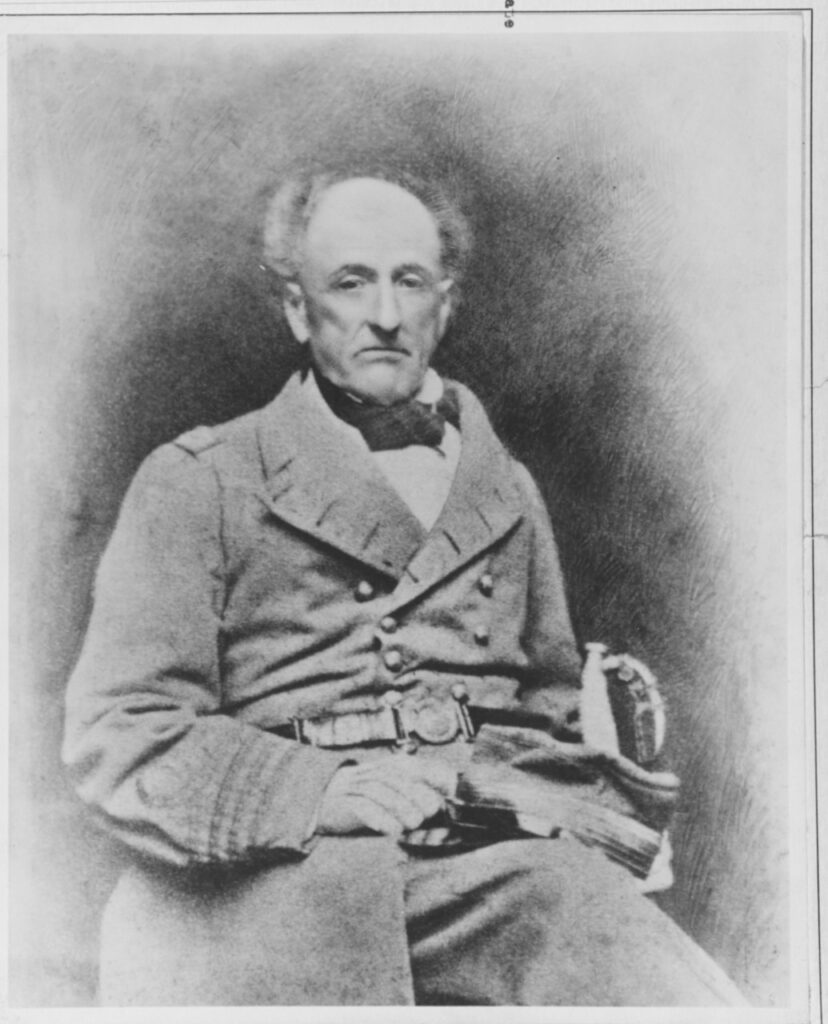
Captain Franklin Buchanan
Franklin Buchanan was born in Maryland in 1800 and entered the United States Navy in 1815.30 Over more than four decades of service, he gained extensive experience in sailing and steam-powered vessels, overseas patrols, and naval administration. He participated in anti-piracy operations and diplomatic missions and rose steadily through the ranks. One of his most important prewar roles was serving as the first superintendent of the U.S. Naval Academy, where he helped establish early standards for naval education.31 By the 1850s, Buchanan had earned a reputation as a capable and disciplined senior officer.
Following the outbreak of the Civil War in 1861, Buchanan resigned from the U.S. Navy and joined the Confederate States Navy. Although Maryland remained in the Union, he chose to support the Confederacy due to personal and regional loyalties. Because of his seniority and technical knowledge, Confederate leaders quickly placed him in high-ranking positions. When the ironclad CSS Virginia neared completion in early 1862, officials sought an experienced officer to command their most important warship.32
Buchanan’s long career and familiarity with steam vessels made him the preferred choice, and he was appointed captain shortly before the ship entered combat. Buchanan commanded the Virginia during its first major engagement at Hampton Roads on March 8, 1862.33 Under his leadership, the ironclad destroyed the USS Cumberland and USS Congress, demonstrating the effectiveness of armored ships. During the battle, Buchanan was wounded by small-arms fire and forced to relinquish command.34 After recovering, he continued serving in senior Confederate naval positions, including later commands along the Gulf Coast.35 His selection as captain reflected both his professional reputation and the Confederacy’s reliance on veteran leadership.

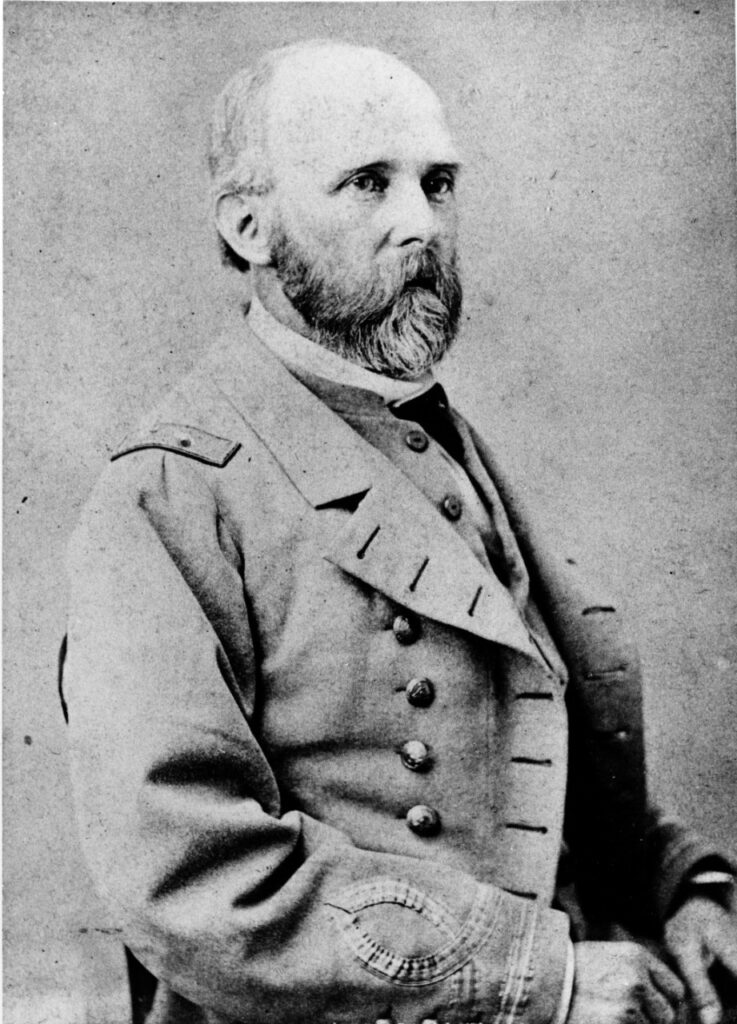
Captain Catesby ap Roger Jones
Catesby ap Roger Jones was born in Virginia in 1821 and entered the United States Navy as a midshipman in 1836. He served for more than twenty years aboard various vessels in the Atlantic, Mediterranean, and Pacific regions.38 During this time, he developed strong skills in navigation, gunnery, and ship operations. Jones earned a reputation as a technically capable and reliable officer, advancing steadily through the ranks.39 By the late 1850s, he was regarded as a promising naval professional.
After Virginia’s secession in 1861, Jones resigned from the U.S. Navy and joined the Confederate Navy. He was soon assigned to duties involving coastal defense and naval organization in Virginia waters.40 Because of his technical expertise, Jones was selected to serve as executive officer aboard the CSS Virginia during its construction and fitting-out period. In this role, he became intimately familiar with the ship’s design, weapons, and machinery.41 He also helped train the crew and organize battle procedures, preparing the vessel for combat. When Franklin Buchanan was wounded on March 8, 1862, Jones assumed command of the Virginia. He directed the ship for the remainder of the first day’s fighting and throughout the ironclad duel with the USS Monitor on March 9.42
Although the battle ended without a clear victor, Jones’s performance was praised by Confederate officials. He continued serving in administrative roles after the loss of the Virginia.43
Later Operations and Strategic Limitations
Following the Battle of Hampton Roads, the Virginia remained active in the region but was increasingly restricted by its design. Its deep draft prevented it from traveling far up the James River, limiting its ability to support Confederate land forces.45
The Union Navy strengthened its blockade and avoided direct engagement unless conditions were favorable. The presence of the USS Monitor and additional ironclads reduced the Virginia’s strategic impact.
Mechanical failures, boiler issues, and limited coal supplies further reduced operational effectiveness. The ironclad was difficult to repair due to shortages of skilled labor and industrial resources in the Confederacy.4647 Despite several attempts to provoke another major engagement, the Virginia never again achieved the dramatic success of its first battle.
Retreat and Destruction
In May 1862, Union forces advanced toward Norfolk, threatening Confederate control of the region. As Union troops approached, Confederate leaders evacuated the city and surrounding shipyards.
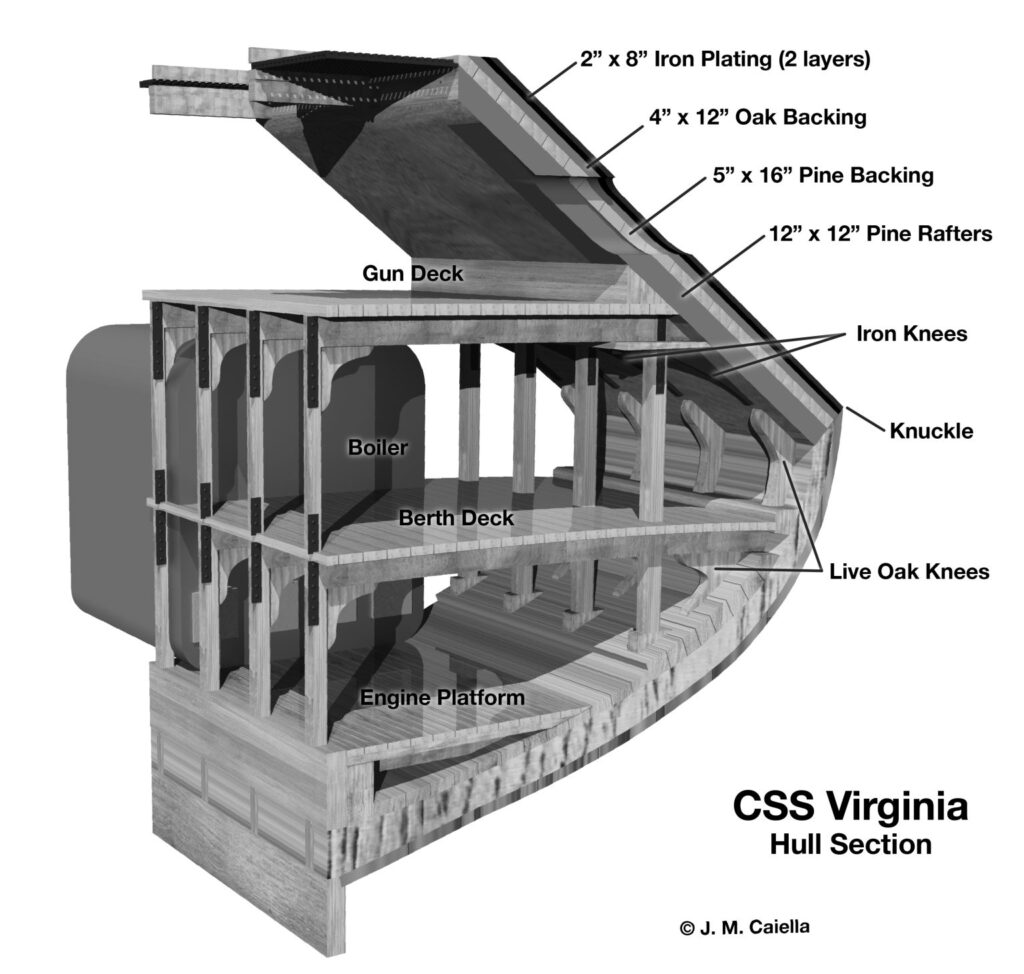
The sides of the vessel, as far down as six feet below the watermark, are likewise heavily plated with iron. The engines and machinery of the ship are also all below the water line.
“Description of the Merrimack,” The Charleston Mercury (Charleston, SC), March 8, 1862, 1.
With Norfolk abandoned, the CSS Virginia lost its primary base of operations. Its deep draft prevented it from escaping upriver or reaching open sea. Attempts to lighten the vessel by removing guns and supplies failed to reduce its draft sufficiently.49
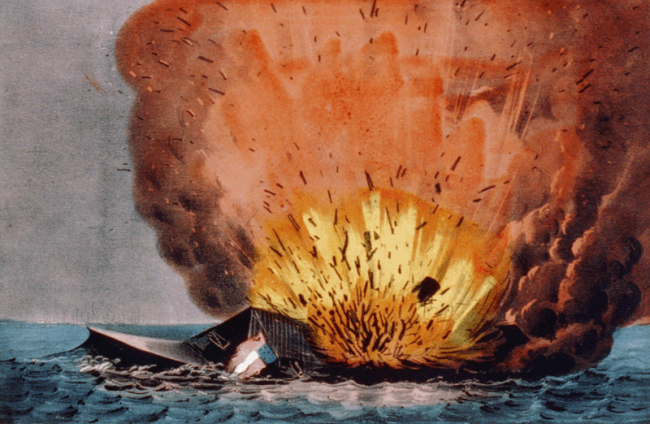
On May 11, 1862, the crew sailed the Virginia near Craney Island, where it was deliberately set on fire and scuttled to prevent capture. Explosions from the ship’s magazine destroyed much of the remaining structure.50 51The destruction of the Virginia marked the end of the Confederacy’s first major ironclad and symbolized both the promise and limitations of early armored warships.
- “CSS Virginia,” Encyclopedia Virginia, last modified 2023. ↩︎
- “Battle of Hampton Roads: Flag Officer Franklin Buchanan, CSA,” American Battlefield Trust. ↩︎
- Dwight Hughes, “Exploring the Ironclads Monitor and Virginia/Merrimack,” Emerging Civil War, March 9, 2023. ↩︎
- Hickman, Kennedy. “CSS Virginia.” ThoughtCo. ↩︎
- “CSS Virginia Destroys USS Cumberland and USS Congress — 8 March 1862,” U.S. Naval History and Heritage Command. ↩︎
- “Confederate Ironclad Navy,” Naval History Magazine, U.S. Naval Institute, January 2014. ↩︎
- Emerging Civil War. “CSS Virginia Cross-Section.” Accessed March 14, 2026. ↩︎
- “Confederate Ironclad Navy,” Naval History Magazine, U.S. Naval Institute, January 2014. ↩︎
- “CSS Virginia Destroys USS Cumberland and USS Congress — 8 March 1862,” U.S. Naval History and Heritage Command. ↩︎
- “CSS Virginia Destroys USS Cumberland and USS Congress — 8 March 1862,” U.S. Naval History and Heritage Command. ↩︎
- Dwight Hughes, “Exploring the Ironclads Monitor and Virginia/Merrimack,” Emerging Civil War, March 9, 2023. ↩︎
- Never Felt Better, “Hampton Roads,” in “NFB’s Decisive Battles of the World: Hampton Roads,” February 13, 2011. ↩︎
- “Battle of Hampton Roads: Flag Officer Franklin Buchanan, CSA,” American Battlefield Trust. ↩︎
- “Battle of Hampton Roads,” American Battlefield Trust, accessed March 5, 2026. ↩︎
- “CSS Virginia,” Encyclopedia Virginia, last modified 2023. ↩︎
- Dwight Hughes, “Exploring the Ironclads Monitor and Virginia/Merrimack,” Emerging Civil War, March 9, 2023. ↩︎
- “Battle of Hampton Roads,” American Battlefield Trust, accessed March 5, 2026.
↩︎ - Davidson, Julian Oliver. USS Monitor in Action with CSS Virginia, 9 March 1862. Painting. New York Public Library Digital Collections. ↩︎
- Symonds, Craig, “Battle of Hampton Roads,” American Battlefield Trust.
↩︎ - “Confederate Ironclad Navy,” Naval History Magazine, U.S. Naval Institute, January 2014. ↩︎
- Symonds, Craig, “Battle of Hampton Roads,” American Battlefield Trust. ↩︎
- Symonds, Craig, “Battle of Hampton Roads,” American Battlefield Trust. ↩︎
- “CSS Virginia Destroys USS Cumberland and USS Congress — 8 March 1862,” U.S. Naval History and Heritage Command. ↩︎
- “Confederate Ironclad Navy,” Naval History Magazine, U.S. Naval Institute, January 2014. ↩︎
- Symonds, Craig, “Battle of Hampton Roads,” American Battlefield Trust. ↩︎
- Dwight Hughes, “Exploring the Ironclads Monitor and Virginia/Merrimack,” Emerging Civil War, March 9, 2023. ↩︎
- Symonds, Craig, “Battle of Hampton Roads,” American Battlefield Trust.
↩︎ - “CSS Virginia Destroys USS Cumberland and USS Congress — 8 March 1862,” U.S. Naval History and Heritage Command. ↩︎
- “Clash of the Ironclads – The Battle of Hampton Roads.” YouTube video. Accessed March 8, 2026. ↩︎
- “Battle of Hampton Roads: Flag Officer Franklin Buchanan, CSA,” American Battlefield Trust. ↩︎
- “Battle of Hampton Roads: Flag Officer Franklin Buchanan, CSA,” American Battlefield Trust. ↩︎
- “Confederate Ironclad Navy,” Naval History Magazine, U.S. Naval Institute, January 2014. ↩︎
- “Confederate Ironclad Navy,” Naval History Magazine, U.S. Naval Institute, January 2014. ↩︎
- “Battle of Hampton Roads: Flag Officer Franklin Buchanan, CSA,” American Battlefield Trust. ↩︎
- “Battle of Hampton Roads: Flag Officer Franklin Buchanan, CSA,” American Battlefield Trust. ↩︎
- Photographed in Confederate Navy uniform, during the Civil War. Courtesy of F.B. Owen, 1929. U.S. Naval History and Heritage Command Photograph. ↩︎
- Emerging Civil War. “CSS Virginia Armament.” Emerging Civil War, 2023. ↩︎
- “CSS Virginia,” Encyclopedia Virginia, last modified 2023. ↩︎
- “CSS Virginia,” Encyclopedia Virginia, last modified 2023. ↩︎
- Dwight Hughes, “Exploring the Ironclads Monitor and Virginia/Merrimack,” Emerging Civil War, March 9, 2023. ↩︎
- Dwight Hughes, “Exploring the Ironclads Monitor and Virginia/Merrimack,” Emerging Civil War, March 9, 2023. ↩︎
- “Battle of Hampton Roads,” American Battlefield Trust, accessed March 5, 2026. ↩︎
- “Confederate Ironclad Navy,” Naval History Magazine, U.S. Naval Institute, January 2014. ↩︎
- Photographed in Confederate Navy Uniform, circa 1863-64. Courtesy of his grandson, Catesby ap R. Jones. U.S. Naval History and Heritage Command Photograph. ↩︎
- Dwight Hughes, “Exploring the Ironclads Monitor and Virginia/Merrimack,” Emerging Civil War, March 9, 2023. ↩︎
- “CSS Virginia,” Encyclopedia Virginia, last modified 2023. ↩︎
- Dwight Hughes, “Exploring the Ironclads Monitor and Virginia/Merrimack,” Emerging Civil War, March 9, 2023. ↩︎
- Emerging Civil War. “CSS Virginia Hull Section.” Emerging Civil War, 2023. ↩︎
- “Confederate Ironclad Navy,” Naval History Magazine, U.S. Naval Institute, January 2014. ↩︎
- “CSS Virginia,” Encyclopedia Virginia, last modified 2023. ↩︎
- “Confederate Ironclad Navy,” Naval History Magazine, U.S. Naval Institute, January 2014. ↩︎
- Norder, Steve. “The Death of an Ironclad: The Final Hours of the CSS Virginia.” MilitaryHistoryNow.com, February 12, 2020. Image source: Wikimedia Commons. ↩︎